Transnational Project Meeting in Brno
Venue: Department of Media Studies and Journalism, Masaryk University Date: 2nd June 2022
The second personal meeting of the NEWSREEL2 project in Brno, Czech Republic.


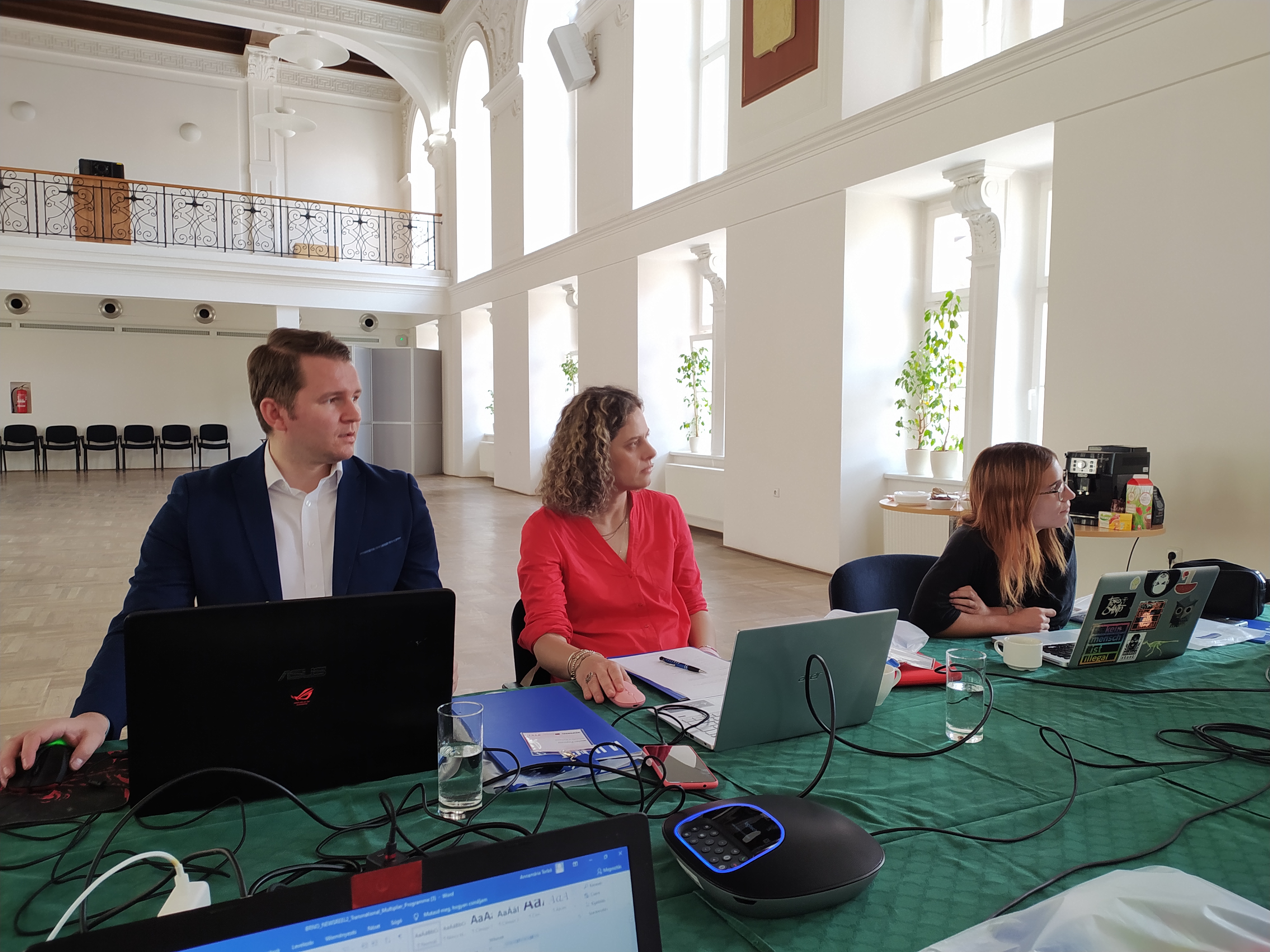


Venue: Department of Media Studies and Journalism, Masaryk University Date: 2nd June 2022
The second personal meeting of the NEWSREEL2 project in Brno, Czech Republic.
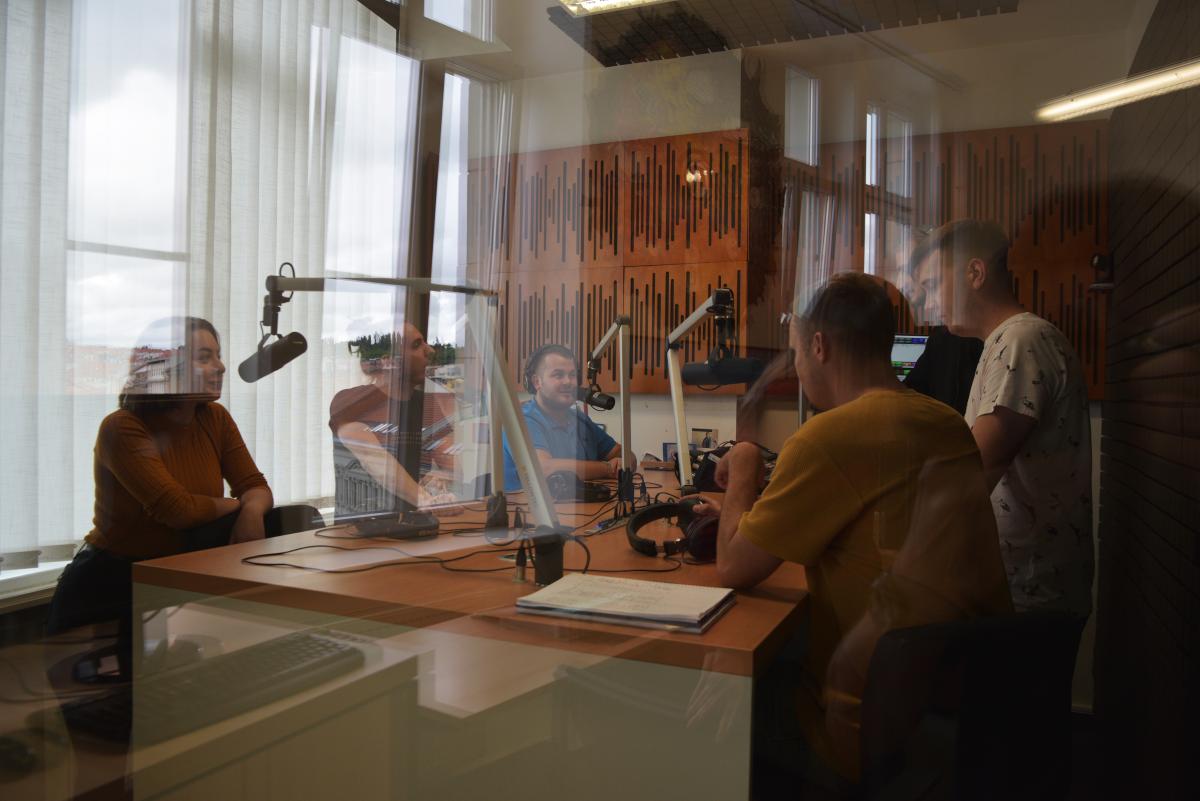
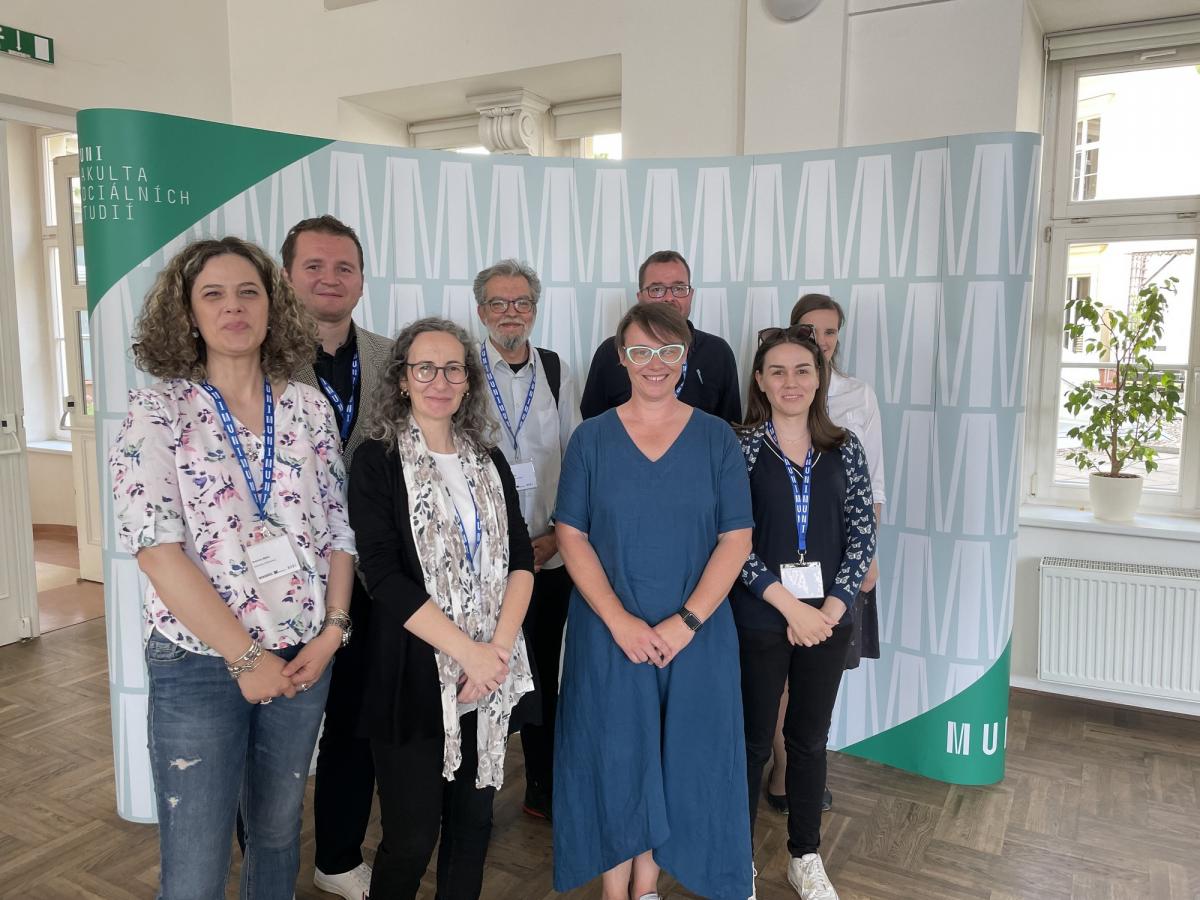 The second multiplier event of the NEWSREEL2 project with the title of "Media and Democracy in Challening Times" was held on 3rd June at the Department of Media Studies and Journalism of Masaryk University in Brno, Czech Republic.
During the event, representatives of the partner institutions introduced the syllabi on the specific project fields.
Lenka Waschková Císařová, head of Department of Media Studies and Journalism opened the programme. After that Annamária Torbó professional leader of the project (University of Pécs) talked about the most important aims and outputs of the project.
The programme was followed by a lecture with the title of "Journalists need emotional/trauma literacy: The case of reporters and fixers covering Ukraine and Israel/Palestine" by Johana Kotišová from the University of Amsterdam.
After the coffee break, Monika Metyková from the University of Sussex held her lecture on "Journalism Education: Looking Back and Looking Forward" to which partners of NEWSREEL2 could strongly relate.
After lunch, the focus was on the developed syllabi of NEWSREEL2. Four of the nine project fields were highlighted:
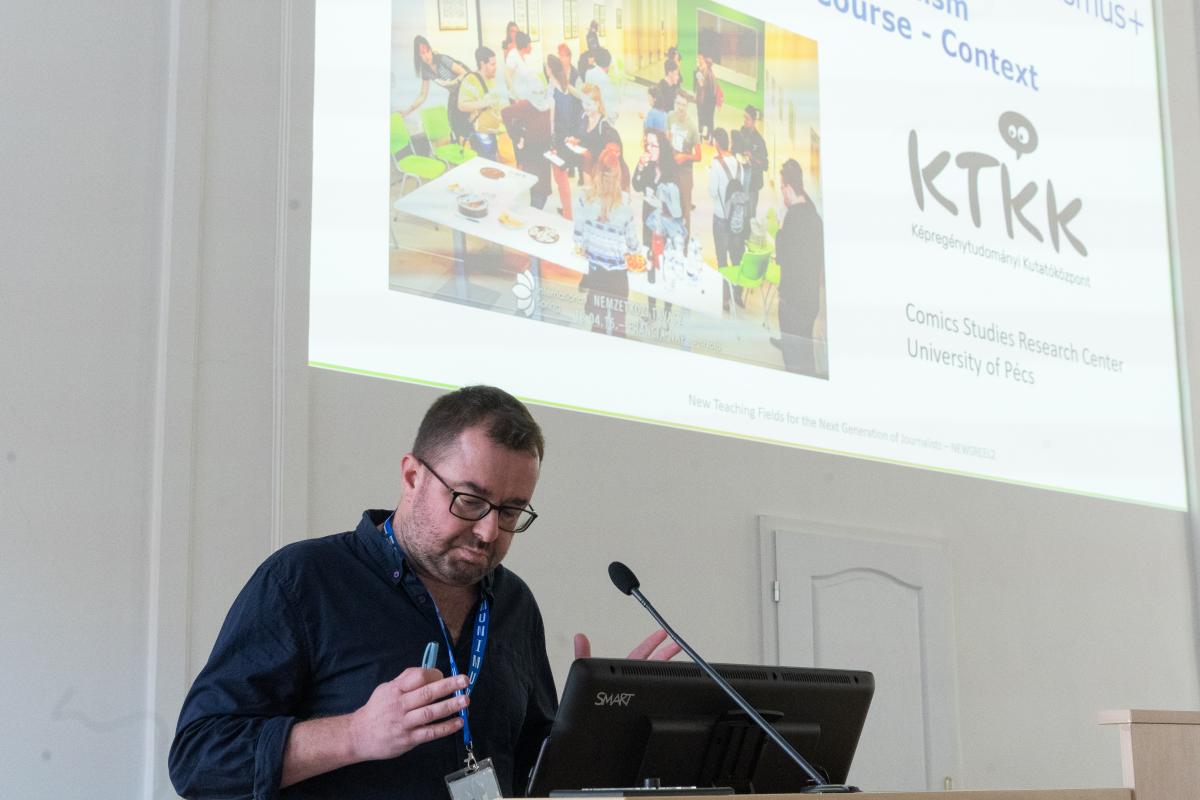
Based on these curricula, we are developing e-learning materials in the current phase of the project. All of the materials will be available on our project website.
The event was closed by a round-table discussion about journalism and journalistic education with current and former students of the Masaryk University and it was moderated by Lenka W. Cisarova.
We are very grateful for our colleagues from the Masaryk University for organizing such an interesting and fruitful event!
You can find more pictures in our gallery: https://newsreel.pte.hu/media/gallery/multiplier_event_brno_introducing_...
Photos: Mariya Ostrenko
 The determining tendencies of the current media environment significantly impact the whole economy of news production and consumption and journalism as a profession indirectly. Due to the expanding processes of digitalisation and convergence, the popularity of social media has increased. News is being consumed more and more online, often through social media, embedded in everyday media consumption, and adapted to user needs with the proliferation of portable smart devices.
This shift in media consumption and the technological development is threatening the boundaries of journalism, and many researchers interpret the resulting transformation as boundary work or even boundary struggle (Carlson and Lewis, 2015; Boesman and Costera Meijer, 2018). As part of this struggle, newsrooms are moving away from traditional journalistic platforms to social media. However, this is a completely new and unfamiliar territory, both in terms of newsroom practice and the traditional skills of journalists.
To gather the best practices and to get an idea of the journalistic skills needed in this field, we interviewed leading journalists of newsrooms from Hungary, Czech Republic, Romania, Portugal, and Germany as part of the NEWSREEL2 - New Teaching Fields for the Next Generation of Journalists project. The interviews focused on the use of social media, including the purposes, tools and strategies used in the production and dissemination of news on social media sites in general, on Instagram in particular.
Different challenges, similar solutions
Social media content production is proving to be an important strategic tool for both public service, private and community media in terms of their own specific objectives and markets, according to the interviews. The newsrooms interviewed face partly different challenges, so by entering social media with their professional accounts they choose the same strategy and tools to achieve very different goals. The main issue for the long-established public service news brand in Germany was that the average age of their audiences is high, and they were struggling to reach young audience segments. For the emerging, community-based, opposition news portal in Hungary, the challenge is to increase audience reach and get into the daily news consumption routine of its readers. For a private television in Portugal, the main question is how to effectively connect television and digital platforms. A quarterly non-fiction magazine in Romania that was published previously print-only, wanted to better meet the needs of its audience.
The main aim of social media content production is the same or very similar in most of the cases examined: to reach young people who are only available on the social networks, thus rejuvenating the audience, to build and increase the audience and to achieve regular visits to the various platforms (TV, Facebook, Instagram, etc.) and accounts. Within this, the operation of the Instagram account serves several purposes, depending on the content posted there: distributing news separately and independently of the original platform, driving traffic to the website or the medium's Facebook page, where the primary news distribution takes place, improving the media outlet’s brand, or educating the audience and shaping their attitudes.
Team and resources
The interviewees all work in the field of visual and social media, in some management role. A few of them manage a large department of 15-20 people, some smaller (a few people), and some of the media interviewed do not have a dedicated social media content production team at all. In all cases, the coordination of tasks related to the management of social media accounts and the work of journalists and editors seems to be a key issue. In certain cases, this is achieved through some degree of separation and specialisation, and in others, social media content is produced by the journalists themselves, with the help of graphic editors or motion designers. Newsrooms are trying to support their journalists to produce social media stories with a variety of solutions, including various manuals and templates for creating social media content. These formats and templates also ensure the consistency of content in terms of genre and style, which is necessary given that several journalists are producing content independently for the same platform.
Social media affordances for journalistic content
During the interviews with journalists, we mainly focused on the use of Instagram for news distribution. According to the journalists and editors asked, one or more of the following types of content is used by each of the media outlets:summaries of articles, recommendations (movies, music, books), original stories (for example photo reportages), IGTV videos, Instagram takeovers from people invited, polls, quotes, posts that promote their other media content (newsletter, podcast, video, article) or another platform. Each newsroom has developed its own set of tools, i.e., a set of certain types of resources (e.g., native texts, own photos, own videos, emojis, infographics, illustrations, collages, mentions of other profiles, journalists or contributors, hashtags). Instagram provides certain features that can be used effectively for journalistic purposes: the so-called highlights, the swipe up option or the poll and question box in stories allow journalists both to archive ephemeral content (stories) and to direct traffic to a website or connect with their followers.
Required social media skills
According to the interviewees, there is a need in journalism education to teach skills that will help journalists to work also in social media. In particular, the need for skills in visual editing, social media management, social media analysis (understanding metrics and native tools) and general digital competences were highlighted. As branding is also an important function of these social media accounts, journalists involved in this should also be aware of the techniques involved, pointed out one interviewee. The use of social networking sites for journalistic purposes anyway requires continuous learning, experimentation and analysis of social media metrics and audience behaviour - this is the shared opinion of all respondents.
Special thanks to the interviewees: Karina Csengel (Mérce), Oana Barbonie (Decât o Revistă), Paula Oliveira (TVI24), Ondřej Šimeček (Česká Televize) and Patrick Christian Weinhold (ARD-aktuell/tagesschau)
The full reports of the study are available within the recently published NEWSREEL2 research report.
This article was written by Rita Glózer (University of Pécs).
Photo: Pixabay
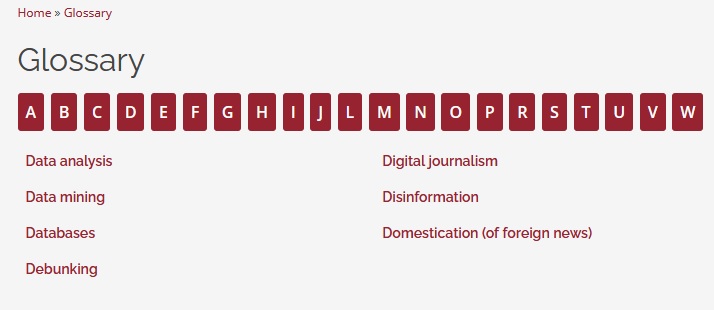 One of the outputs of NEWSREEL2 is creating a free accessible online glossary in English that helps to build a common knowledge base. We decided to continue the glossary of NEWSREEL1, so all of the terms connected to the specific fields of journalism can be found in the same place.
The structure of the glossary follows the fields of the syllabi and the e-learning materials, therefore it includes the most important terms from all fields. The areas of NEWSREEL2 are Storytelling in social media, Graphic journalism, Improving democratic sensibility, Covering migration, Foreign coverage, Journalism for voice-activated assistants and devices, AI and journalism, robot journalism and algorithms, Verifying and analysing fake news and Debunking disinformation.
36 terms connected to these professional fields are already available, including Instagramism, Webcomics, Public service media, Ethics of covering migration, Foreign reporting, Voice-activated assistant, Artificial Intelligence, Disinformation and Debunking.
If you are interested in all of the entries, please check the glossary menu!
 “Media consumers started to think that they no longer need journalists because they have direct access to the circles of power. No one understands that they have access to what the circles of power want,” says Ioana Avădani, director of the Centre for Independent Journalism in Romania. In this one sentence, she summarizes the challenges that journalists are currently facing in many European countries.
On the one hand, journalists have reached a point where they are required to fulfil traditional normative ideals – to be independent and pluralistic, to provide a forum for the exchange of opinions between the state and citizens, to defend human rights, to hold politicians to account, and to encourage people to participate in public affairs. On the other hand, they face direct challenges to these ideals. With the shift of audiences to the online environment and the fragmentation of the media, audiences suddenly have the opportunity to consume content that matches their beliefs and thematic interests and, conversely, avoid content that does not match their views, which may increase political and media polarization.
As part of the international educational project NEWSREEL2, we decided to map the current challenges journalists face in relation to democracy and how this affects their work. We interviewed five experts who work mainly in investigative journalism in five European countries – Portugal, Romania, Czech Republic, Hungary, and Germany. We used expert interviews as a method of data collection: interviews were conducted in English through a videoconferencing platform and lasted on average 60 minutes. Our aim was, among other things, to find out what topics and knowledge should be part of journalists’ university education if they want to succeed in the current media environment.
The experts understand media as a vital part of democratic society. As the Czech investigative reporter Pavla Holcová points out, “anything that isn’t critical is PR and I think all those clichés about watchdogs are true.” Nevertheless, there are views that media workers should not directly intervene in social change, and if they do, it should be in a specific way: “Journalists should obey all the laws of the country and if they don’t like them, they should not break them but rather try to change them,” says Avădani.
Media and Power
The biggest challenge for civic relations in democratic society is the power relations of the actors – journalists, business owners, advertisers, and politicians. As our interviewees point out, one of the consequences of the struggle for journalistic independence from today’s ever-concentrating media ownership in the hands of local businessmen, and the growing influence of advertisers and the state in many European countries, is the transition of the media to the non-profit sector. At the same time, the transformation of media into NGOs can be understood as a solution to problems with the sustainability of the traditional news media business model. These organizations usually have other sources of funding than advertisement, e.g. donation-based financing, membership programmes, or partnerships with other media. The economic pressures associated with the changing business model are also affecting newsroom budgets. This is reflected, among other things, in the lack of good editors. “Mainly because of the rush and the marketing pressure, and at the same time editors don’t make money for the newspapers,” says Holcová of investigace.cz. In addition, the media are often forced to centralize, particularly local media: “The financial situation is challenging for the local journalism, a lot of newsrooms had to merge, they are not local anymore, they are centralized. On the other hand, I know a lot of people who have started local journalism outlets funded by community,” states Jonathan Sachse, manager of Correctiv.Lokal in Germany.
The relationship between journalists and politicians is also complicated. Interviewees stress the current trend of politicians communicating with citizens directly through social media, and they are therefore no longer dependent on journalists and the professional media to get their message out. On the contrary, journalists are more and more dependent on the politicians’ online posts and are willing to take anything as a quotation. The experts see a clear link between this development and the weakening of democracy: “It is a distribution problem and obviously we can’t get back to the old times, when journalists were the gatekeepers. And I don’t think that it was good, it was not very democratic, but what we have now is bad for journalists but also for democracy,” says András Pethő, editor of the Hungarian investigative platform Direkt36. Media and Responsibility
For media to fulfil their role in the post-truth age, on the individual level journalists consider themselves to be socially responsible, choosing accountability, trustworthiness, factuality and serving the public interest in the framework of journalism-related laws and ethics. As editor Pethő points out, “I think we have to take our job seriously, but I think it’s better not to take ourselves too seriously.”
The most effective way to maintain public credibility is by striving for maximum accuracy and fact-checking, which secondarily also contributes to the safety of journalists. As well, transparency in what journalists do and how they do it is part of building trustworthiness. “Anyone who applies cowboy journalism gets fired. That’s why we try not to have an opinion on the things we write about, we try to disengage, listen, and hear both sides. And we try to completely move away from opinion journalism, I think we’re supposed to be much more of an observer, putting things in context, rather than a commentator on what’s going on. And the other thing that enhances security is fact-checking,” adds investigative journalist Holcová.
Recommendations for the Training of Journalists
All of our expert interviewees think that training throughout one’s whole career is essential for journalists. Some of them have even been, or are actively involved in, training journalists, or teaching journalism at university. Our communicative partners identified the topics and knowledge that journalists should acquire and be trained in repeatedly:
Moreover, they described the specific characteristics of, and skills needed by journalists focused particularly on political or investigative journalism:
The full reports of the study are available within the recently published NEWSREEL2 research report.
This article was written by Klára Smejkal & Lenka Waschková Císařová (Masaryk University).
Photos: Stanislav Krupař, Archive of Department of Media Studies and Journalism, Masaryk University