2020
International workshops for students
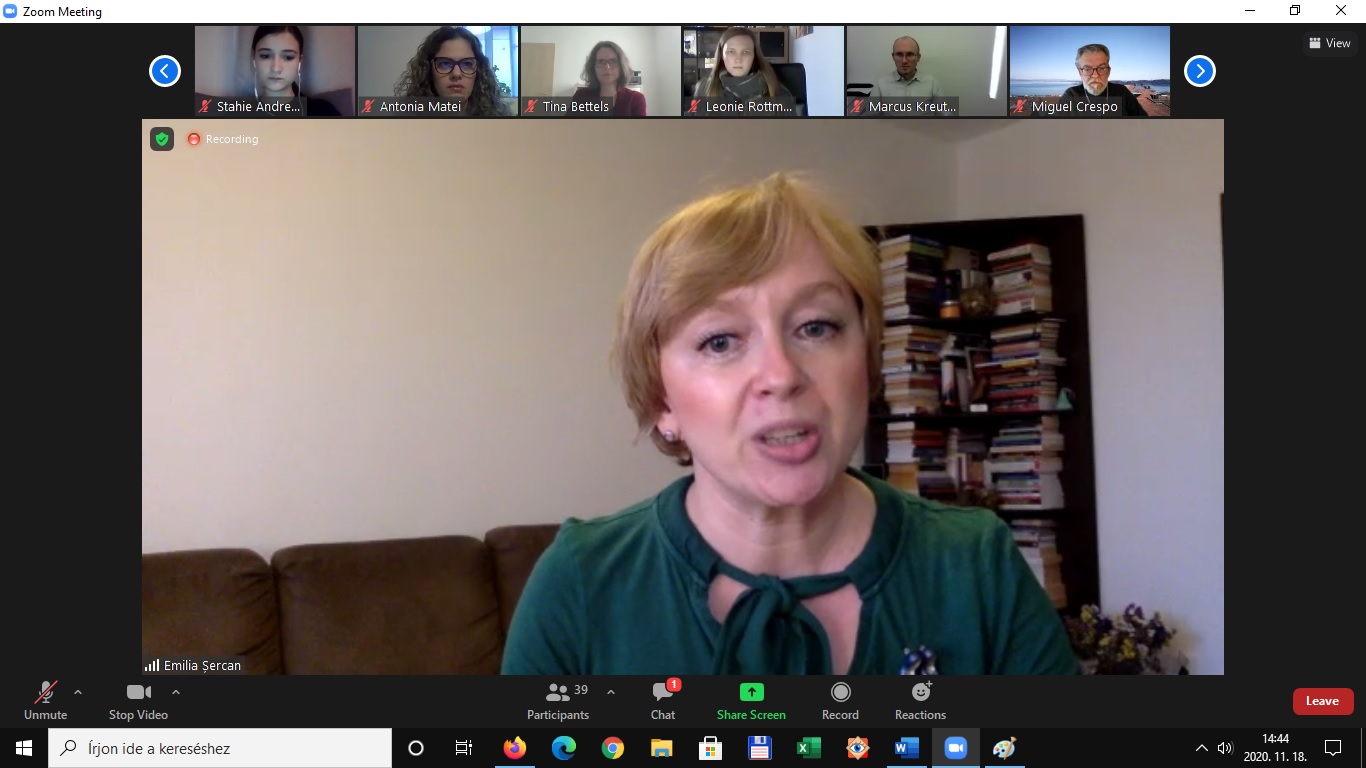
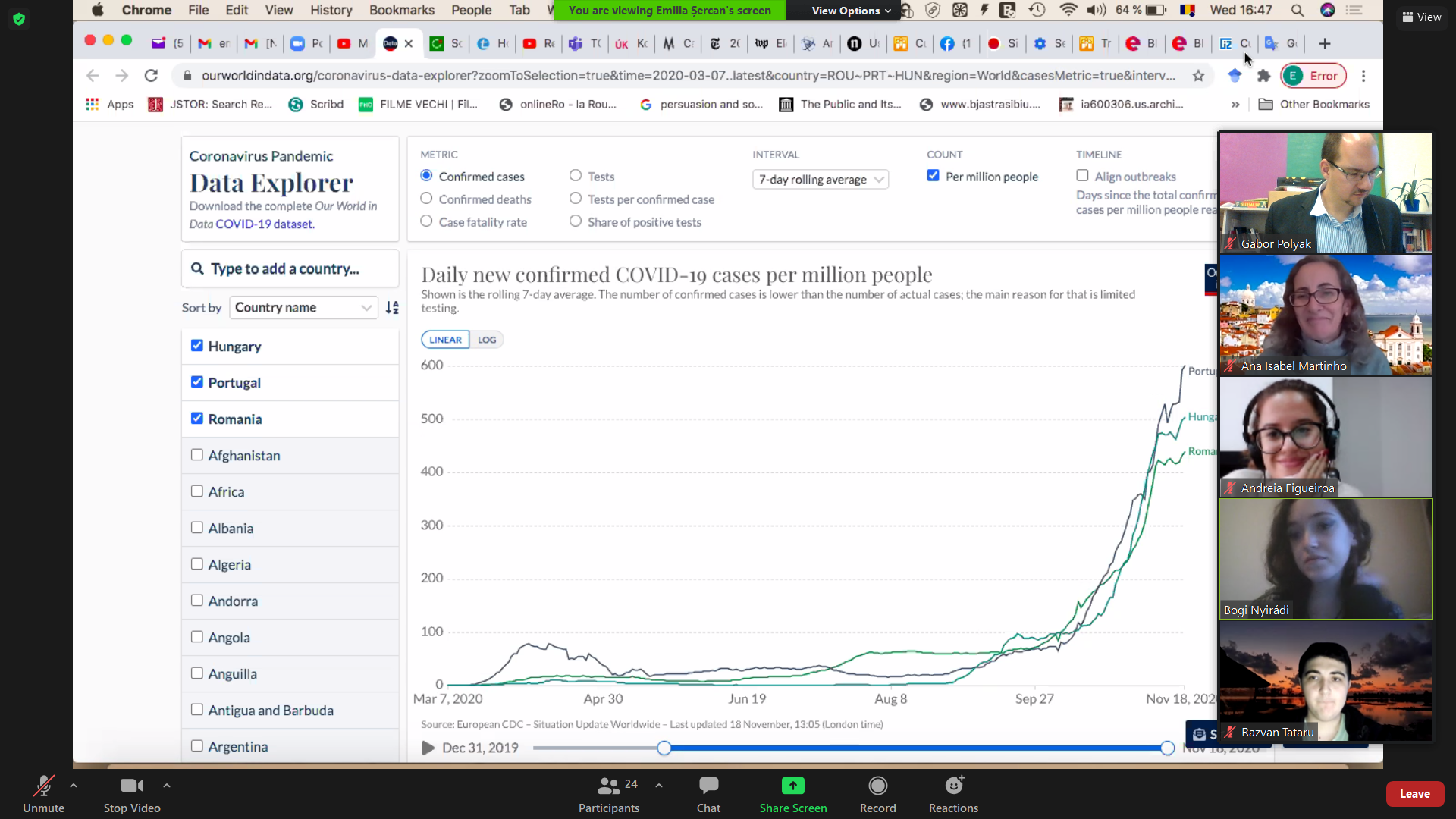
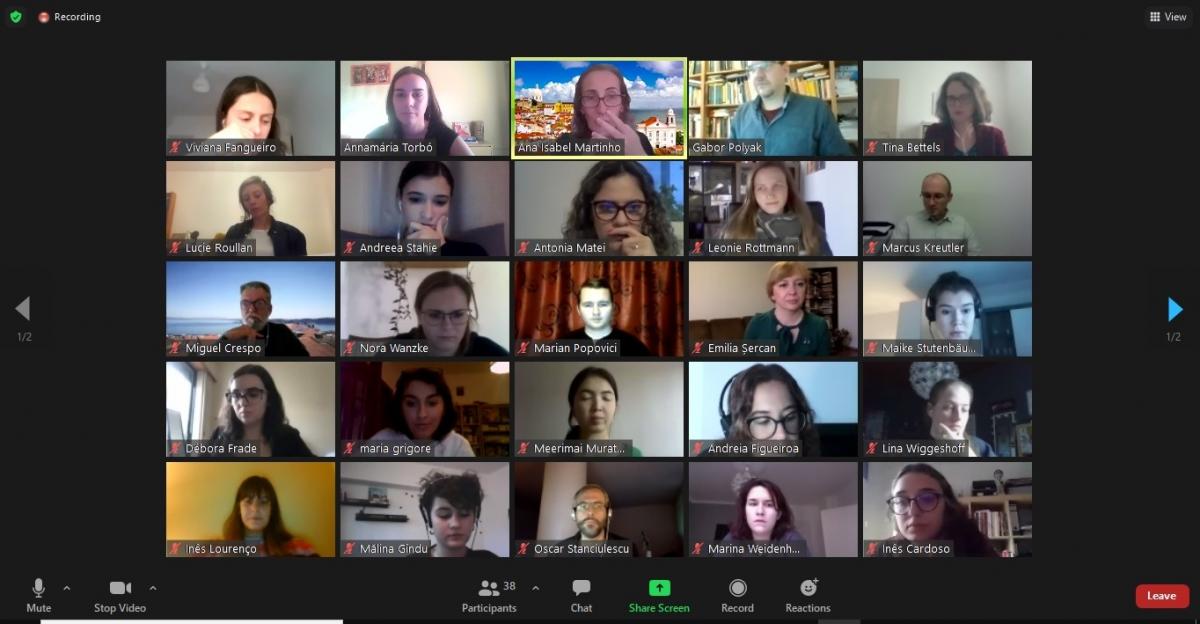
Students from the four universities of the NEWSREEL project took part in two-day workshops on the four professional areas of the project: data journalism, collaborative journalism, business models of journalism and ethical challenges of digital journalism.
The workshops took place online on the 18th and the 25th November 2020 and 32 students were present. The event that originally was planned to be held in Lisbon in the spring of 2020, aimed to get students in touch with each other as they have direct contact with the materials and areas of the NEWSREEL project. They were structured to be held in two diferent days and in two different spaces: a Zoom room with everyone and different Zoom rooms for each specific area.
On the first day every teaching team had 10 minutes to explain a bit about their area and then the students and teachers were parted in groups, for each area. On the second day students continued their works on the different areas and then every group got together to present the results of their work.
The online workshops were very challenging and interesting both for the students and the teachers involved, but the overall opinion was very positive from both sides.
Journalism and the Future Webinar - Report on the final multiplier event
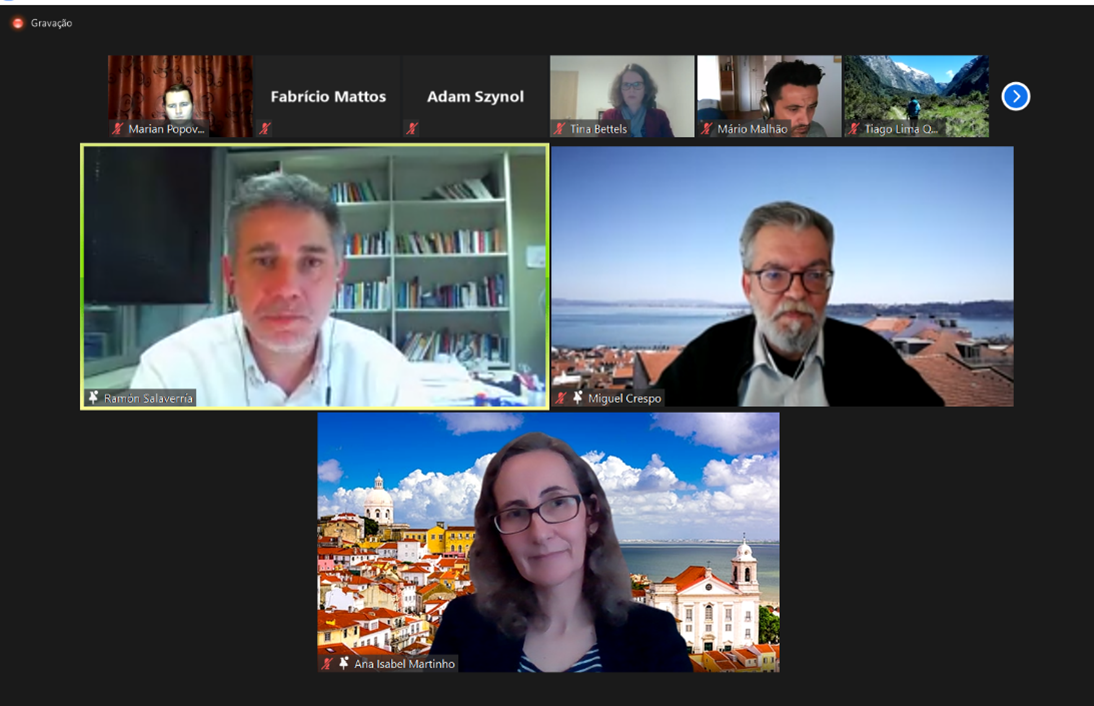
The Webinar “Journalism and the Future” was organized by the Portuguese team within the framework of the NEWSREEL Project. This multiplier event would have originally taken place in March 2020 in Lisbon. Although the programme was scheduled and organized, it couldn’t be held due to restrictions because of the coronavirus pandemic.
Being so, the event was reprogrammed to take place online, in the form of a Zoom Webinar. Its main goal was to produce discussion about journalism and the future, mainly in what regards the digital media. The other aim of the event was to present the results of the NEWSREEL project, and communicating the work of the project’s team.
Professor Ramón Salaverría, from the University of Navarra, in Spain, was the Keynote speaker of the event.
Salaverría spoke about “Digital native media trends” and shared his vision and knowledge about digital media’s trends. Ramón Salaverría is a professor and researcher of digital journalism. Associate Dean of Research at the School of Communication, University of Navarra (Pamplona, Spain) and former Chair of the Journalism Studies Section at ECREA (2010-12).
Gábor Polyák, head of the NEWSREEL project - New Skills for the Next Generation of Journalists, from the University of Pécs, in Hungary, presented all of the outcomes of the project: the comparative research report, the syllabi on the four professional fields, the e-learning materials based on the syllabi, the teaching guide connected to the learning materials, and the glossary, the collection of the most important terms connected to the fields of the project.
Polyák also introduced the upcoming NEWSREEL2 project, that aims to continue the work developed with NEWSREEL. Both project are Erasmus + financed projects and their ultimate goal is to improve skills of a new generation of European journalists and to contribute to the strengthening of the common European democratic public sphere by improving the collaborative and cross-border journalism that is able to elaborate and make tangible the huge amount of available data, and that is based on a predictable business strategy and a firm ethical foundation.
There were 66 participants at the event from several countries (eg. Poland, Hungary, Germany, Romania, Portugal, Spain, United Kingdom, etc.), within Europe, but also from Brazil.
The Q&A session was very interesting, with interventions of participants from several countries. This was the last multiplier event of the NEWSREEL1 project.
Invitation to the final multiplier event of NEWSREEL
In the representation of NEWSREEL team, we would like to invite you to our final multiplier event that will be held on the 17th of November. The event that was supposed to be in Lisbon at ISCTE-IUL, will now take place online due to the current pandemic situation, and therefore will be able to reach a vaster audience, with its online transmission. During the two-hour event we will introduce the outcomes of the three-year long project.
Professor Ramón Salaverría, from the University of Navarra, in Spain, is the Keynote speaker at the Newsreel Project multiplier event, “Journalism and the Future”, being held by the Portuguese team. Salaverría will speak about “Digital native media trends”. Ramón Salaverría is a professor and researcher of digital journalism. Associate Dean of Research at the School of Communication, University of Navarra (Pamplona, Spain). Former Chair of the Journalism Studies Section at ECREA (2010-12).
Gábor Polyák, head of the NEWSREEL project from the University of Pécs, in Hungary, will introduce the project´s outcomes from the beginning to the end.
New Skills for the Next Generation of Journalists | 2017-1-HU01-KA203-036038| Multiplier Event
PROGRAMME
Journalism and the future (GMT. London time)
15:00 Welcome
15:05 The Newsreel Project: curricula development and outcomes
- Gábor Polyák, professional leader of NEWSREEL project, University of Pécs, Hungary
- Ana Pinto-Martinho, University Institute of Lisbon, Portugal
- Miguel Crespo, University Institute of Lisbon, Portugal
15:30 Keynote: “Digital native media trends”
- Ramón Salaverría, Associate Dean of Research at the School of Communication, University of Navarra, Spain
16:30 Q&A
17:00 Closing
The final version of the e-learning materials
We are happy to announce that the final version of the e-learning materials are available on the portal!
The materials are connected to the four specific fields of the project: data journalism, collaborative journalism, new business models of journalism, and the ethical challenges of the digital public sphere.
The e-learning materials are the main outputs of the three-year-long NEWSREEL project. All educational materials produced by the project team were made openly and freely accessible through open licenses via the project portal. They were developed primarily for using as teaching materials in university courses. However, they were established in a way to provide the opportunity for users to learn without any teacher’s supervision.
The teaching guides of NEWSREEL now published
The set of activities in Phase 4 aimed at testing and finalizing the syllabi and the e-learning materials of the previous phases, and at summarizing the project results in a form that will help to use the outcomes of NEWSREEL by third parties.
As a result of these activities we had courses at the participating universities as a pilot teaching activity. All of the participants organized at least one, one semester long course. The University of Pécs had courses on all of the professional fields of the project. During these courses, we implemented the syllabi and use all of the e-learning materials. The experiences of the courses were summarized in four teaching guides, each for one field. The teaching guides introduce the professional and methodological content of the project and the objectives of the courses. They give a detailed description on the skills and competencies developed by our e-learning materials and a collection of practical examples.
The guides can be downloaded from here:
Data Journalism and Visualization
Collaborative Journalism
News Media Business, Innovation and Project Development
Ethical Challenges of the Digital Public Sphere
Crossing the borders: Experiencing collaborations first-hand
What happens when students from Hungary, Portugal, Romania and Germany join forces to investigate the challenges of environmental protection across Europe? We wanted to find out and dove into the subjects of veganism, youth activism, climate change deniers and sustainable shopping. During the process, we experienced frustration, revelations, and unexpected success.
When we – the German students – first started the seminar in October 2019, only few of us knew what collaborating as a journalist means, let alone what a cross-border collaboration is. To say that we had little experience with the topic would have been an understatement. Of course, we had all worked with other journalists before, but usually not on a bigger scale than one writing the article and the other one taking the pictures. Hence the wild guessing in our first session: am I already working collaboratively when I get information from a correspondent? And aren’t we all collaborating constantly when working in a newsroom?
Changing this state of confusion and experiencing a journalistic collaboration first-hand was therefore something we were all excited for: This was our chance to try a completely new form of journalism that challenged all the old believes and strategies about how to survive in the strongly competitive media markets. It even contradicted with what we were told in other classes at university or in trainee- and internships.
As if wanting to prove to us that this relatively uncommon practice can actually work, our lecturers provided us with several different examples of successful projects, for example “The Reentry Project” from Chicago or the international collaboration on the “Panama Papers”. These examples not only helped us to develop a better understanding of the possibilities of journalistic collaborations, they also gave us the confidence and motivation that we might be able to succeed as well with our own project. Furthermore, they showed us that there isn’t one perfect way to collaborate, but a broad range of approaches.
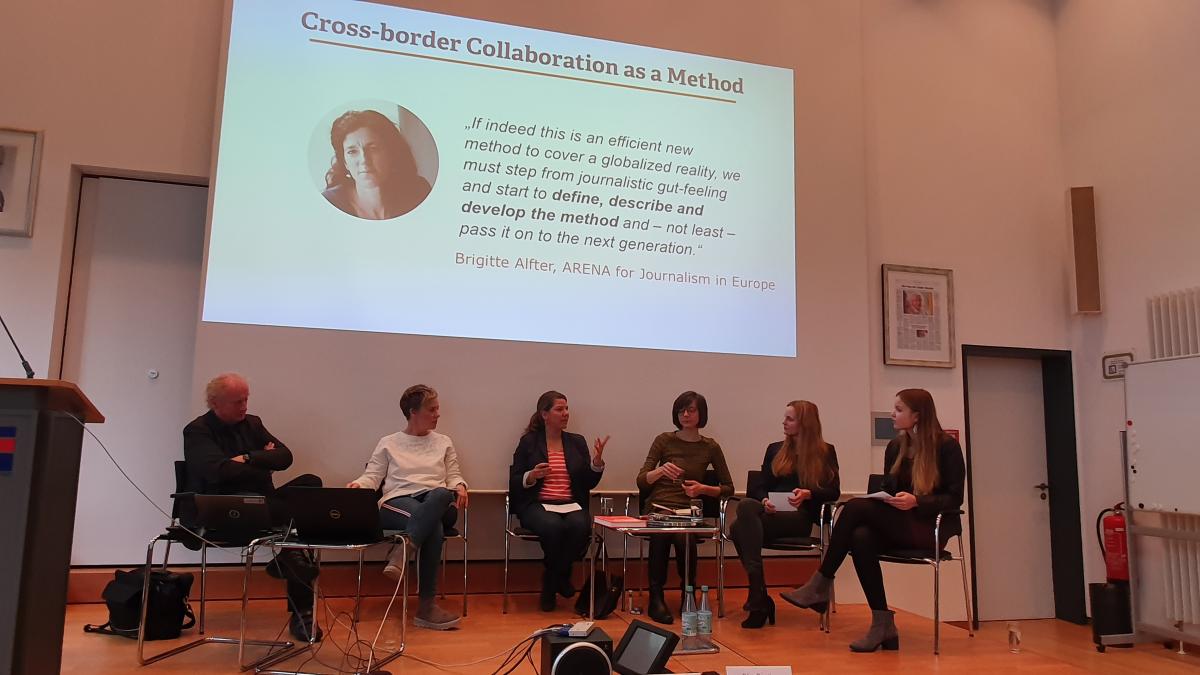
Additionally, within the framework of the conference of the European Journalism Training Association (EJTA), we were able to listen to a keynote given by Brigitte Alfter, one of the – if not the – leading researchers in the field of collaborative journalism. During the course we were given a variety of different reading materials which included her work. Hearing her talk about her research with a strong passion was nonetheless even more convincing. Another speaker that day was Tabea Grzeszyk, freelance journalist and CEO of Hostwriter, an open network that helps journalists to easily collaborate across borders. Among other things, Grzeszyk stressed the importance of all collaborating partners benefiting from the project equally and pointed out that one must keep the different journalistic cultures as well as possible restrictions and dangers for the partners in mind when working cross-border. Even though we would exclusively partner up with students from EU states, this was an important point considering the different degrees of the freedom of the press in the respective countries. We also discussed the differences and similarities in the journalistic cultures in Romania, Hungary, Portugal and Germany during another session later on.
Since we were complete novices, we needed some help to start our collaboration: usually, you would either have an idea that needs to be worked on collaboratively or be part of an international journalism consortium or network that comes up with a new topic together. We on the other hand approached the collaboration slightly unconventional: We already knew who we would collaborate with, then we came up with an overall topic and in the last step we set up the final groups according to our own interests. In these final groups we also defined the topic. Our main topic was ”Youth and Environment”, the subcategories we came up with were “veganism and vegetarianism”, “climate change deniers”, the “Fridays for Future movement” and “different approaches to protect the environment”. The students from each country were then asked to join one of the four groups and discuss the topic further.
Unfortunately, this wasn’t as easy as it sounds: even though we are all journalism or media science students, communication became our biggest obstacle. As we never met our fellow students from the other European countries in person, we had to rely on electronic communication channels such as Slack. For some reason or another, some partners didn’t register themselves or weren’t using it frequently – and therefore missed crucial parts of the conversations.
Nevertheless, all teams managed to narrow down their topics and prepare a pitch for a meeting of the German team members with a group of journalists experienced with collaborative journalism, Dóra Diseri from Reporters in the Field, Tabea Grzeszyk from Hostwriter, Harald Schumann from Investigate Europe and freelance journalist Andrea Hansen. The pitch included the presentation of the overall topic and research questions, potential sources, the schedule and deadlines, the planned workflow, the communication channels, ideas for the publication and the problems the groups were facing. The experts then gave their feedback and helpful advice in plenary. For some groups they suggested another focus, for others they pointed out too high ambitions. Furthermore, they shared their own experiences and their contacts. After that, the groups had the opportunity to talk to the experts individually and ask further questions. This session led to some changes in the subcategories: the veganism and vegetarianism group focused on sustainable livestock farming, the group dealing with different approaches to protect the environment on sustainable consumption.
For a lot of groups, this session kick-started the cooperation. Once the main research questions were set, tasks could be assigned to the team members. Also – as suggested by the experts – a lot of groups switched from Slack to other communication platforms like Signal. During the research phase, most groups managed to establish a somewhat frequent communication with all team members which made planning a lot easier. Step by step, the groups were able to collect data, gather information and conduct interviews.
But still, not all issues were resolved. One problem was the language barrier: none of us is a native speaker and communicating in English was therefore challenging. Some feared to come across as rude, others couldn’t assess the language skills of their team members and weren’t sure whether everyone was on the same page. Additionally, there was some confusion about different cultural practices: How much small talk is necessary? How can you ask someone to do something without nagging? Other groups struggled with people not wanting to talk to journalists and therefore getting stuck in their research. In addition to that, the project partly overlapped with exam weeks, holidays and challenging internships.
Even though these problems were kind of irritating and led to some inefficiency, they also made the whole experience realistic. If we had only read about these struggles, we wouldn’t have been forced to come up with solutions that might help us in future collaborations. Even if we never work in a cross-border project again, we can all take away useful experiences for any teamwork. Also, we were never on our own: the German partners could discuss every issue they faced with their lecturers. The results of the collaborations aren’t in yet. Some groups might publish their work, others might not finish their research. But whatever the result will be: when we stark our next cross-border cooperation, we will be prepared.
This blog post was written by Jana-Sophie Brüntjen, a student of TU Dortmund.
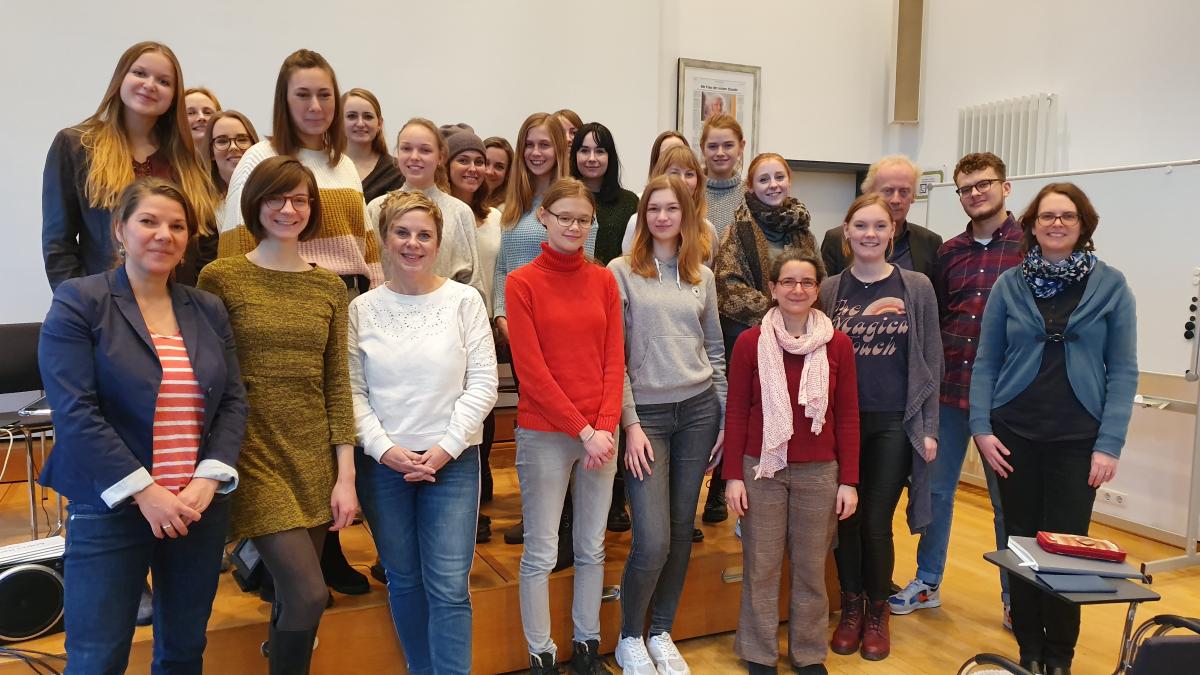
The photos were taken at the meeting with collaborative journalists at the Erich Brost Institute of TU Dortmund.
New entries in the glossary
As a result of Phase 5, we will have a free accessible online glossary in English, that helps to build a common knowledge base. Because of the novelty of the elaborated information and competences, there is no common framework of notions and terminology.
The structure of the glossary follows the fields of the syllabi and the e-learning materials, therefore it includes the most important terms of data journalism, collaborative journalism, business models of journalism and ethical challenges connected to digitalization.
The new entries that are available:
| Coding | Cross-media |
Encryption | Surveillance |
| Computer assisted reporting (CAR) | Crowdsourcing | Investigative journalism |
Volontariat |
Partnership instead of competition
Collaborative journalism has brought us amazing investigations. But it is no universal remedy for the problems that journalism is facing worldwide.
For journalists it is not an entirely new thing to collaborate, but against the background of the current technological and economical revolutions, collaborating with each other has become more important for journalists and media outlets than what one would have expected ten years ago. Single journalists and media enterprises start collaborations with potential competitors, several case studies and manuals give insight into diverse practices, workshops and university seminars prepare journalism students for future collaborations.
Ever since the highly acclaimed and multi-award winning Panama Papers publication in 2016, collaborative journalism has become a household name in the profession. The investigation of cross-border offshore activities of politicians, football players and other VIPs, led by the International Consortium on Investigative Journalism, has become a model for journalistic partnerships and projects.
In the past, mostly foreign correspondents shared their sources and information – and often made sure that their supervisors did not hear about this collaboration. Occasionally, a reporter gave information to colleagues of the second press house in town – if her story would have upset the publisher and therefore was not published. Today, media houses share reporters, technical infrastructure such as servers and entire newsrooms, journalists exchange data and research results, editorial staffs agree on the volume and date of a publication.
Since 2010, collaborative journalism has been gradually affecting the entire industry and has certainly not reached its peak yet. But why and how exactly do competitors become partners? Does collaboration fit with every investigation, every journalist, and every editorial team?
With regards of the roots of its development, digitalization certainly counts as one of the most important reasons for the success of collaborations in journalism. Decreasing revenue streams, changing consumption patterns and reduced staff in newsrooms are some of its negative impacts, which make it more important than ever for journalists and media outlets to join forces. On a positive note, digitalisation greatly simplifies communication, in the fraction of a second, across continents and oceans. In addition, it provides unparalleled access to large databases that cannot be analysed and processed without the collaboration with programmers and graphic designers. It enables the distribution of unlimited content to global audiences and the integration of the audience in the processes of news making.
It was the very first generation of data journalists who united journalistic judgment and the ethics of the open source movement. From there, the new understanding of networking instead of competing, of sharing information, knowledge and infrastructure transferred to further areas of the newsrooms – although some colleagues, supervisors and managers are still sceptical and cautious.
As a rule, partners usually are not direct competitors, but serve different markets or thematic niches: Take the example of the network European Investigative Collaborations that brings together renowned media from all over Europe such as the German magazine Der Spiegel or the daily newspaper De Standaard from the Netherlands. Although the network often encourages other media companies to join single investigations before publication, only one media outlet per country is at the core of the network. This strategy minimizes frictions and therefore deserves consideration before creating a new collaboration.
Each collaboration demands high levels of trust, tolerance and patience as well as the investment of money, staff and time: The investigation needs to be coordinated, the communication between all partners must be simple and secure, and all partners must be able to share a fair amount of resources. In 2018, Nicolas Kayser-Bril, a journalist and pioneer in collaborative data journalism, warned against exaggerated expectations, especially from philanthropic donors who have dedicated themselves to the development of journalism: Collaborations would most likely fail if the partners did not share a common goal – be it to improve research through collective efforts or to achieve greater impact through coordinated publication.
However, so far, collaborative journalism is often funded by philanthropic donors, and even established legacy media are developing their collaborations with the support of foundations and other sponsors. Other funding models such as crowdfunding or community funding are not enough to finance even successful media startups such as ProPublica or the Texas Tribune (both USA).
The interest of academic scholars increased with the rise of successful collaborative journalistic projects: In 2014, the Pew Research Center (USA) published a first substantial study and described five case studies which included legacy as well as newly founded media, single journalists and non-profit organisations. The investigations ranged from a one-time cross-border collaboration on child prostitution to a long-term exchange of diverse content.
In 2017, media scholar Sarah Stonbely presented a first categorisation of different forms of collaborative journalism. Stonbely identifies six different forms of collaborative journalism and distinguishes whether a collaboration is a short- or long-term partnership, and whether the teams work separately, in parallel or integrated. Since 2018, the Center for Cooperative Media, that is headed by Stonbely, has been collecting practical examples of collaborative journalism in a steadily growing database.
An analysis of three partnerships in local journalism has been published by the Reuters Institute in April 2019. In Finland, twelve daily newspapers share a content management system and several editors and reporters. In the United Kingdom hundreds of local and hyperlocal newsrooms are supported by the public broadcaster BBC in the framework of the the “Local News Partnerships”. In Italy, the collaboration between a legacy media outlet and two data journalism start-ups shed light on gambling and several other Italian media outlets published their results.
As cross-border research is becoming more important, it is also attracting more interest in scholarly debates, as the recent publication of a special issue of the Journal of Applied Journalism & Media Studies on cross-border journalism shows. Among other things, the collection examines the influence of cross-border journalism projects on the transnationaliation of the public and shows how cross-border journalism can counteract distortions in reporting and promote diversity.
With growing interest in collaborative journalism, more and more manuals and other tools are appearing that aim to ease the difficulties of collaboration between different time zones, languages and cultures. The Northern-American journalist Heather Bryant has drawn from her experiences in public broadcasting in Alaska to develop a manual and a digital platform for journalistic collaborations. The German-Danish journalist Brigitte Alfter revised her manual on cross-border journalism, which was first published in Danish in 2017, and published it in English in 2019. The platform Hostwriter enables journalists to connect and to collaborate with colleagues worldwide. Workshops on collaborative journalism are developed and held in universities and other learning venues – the development of e-learning sessions on collaborative journalism in the framework of the Newsreel project is going to further this current trend.
Building networks and sharing things and knowledge, corresponds to the zeitgeist. However, collaborative journalism certainly is not a mayfly. Because in an increasingly complex world, the demands on the work of journalists are increasing – demands that the proverbial “lonely wolf” can no longer fulfil.
This text was written by Nadia Leihs and first appeared on the German section of the European Journalism Observatory.
Photo: Pixabay