2019
Report on the third multiplier event
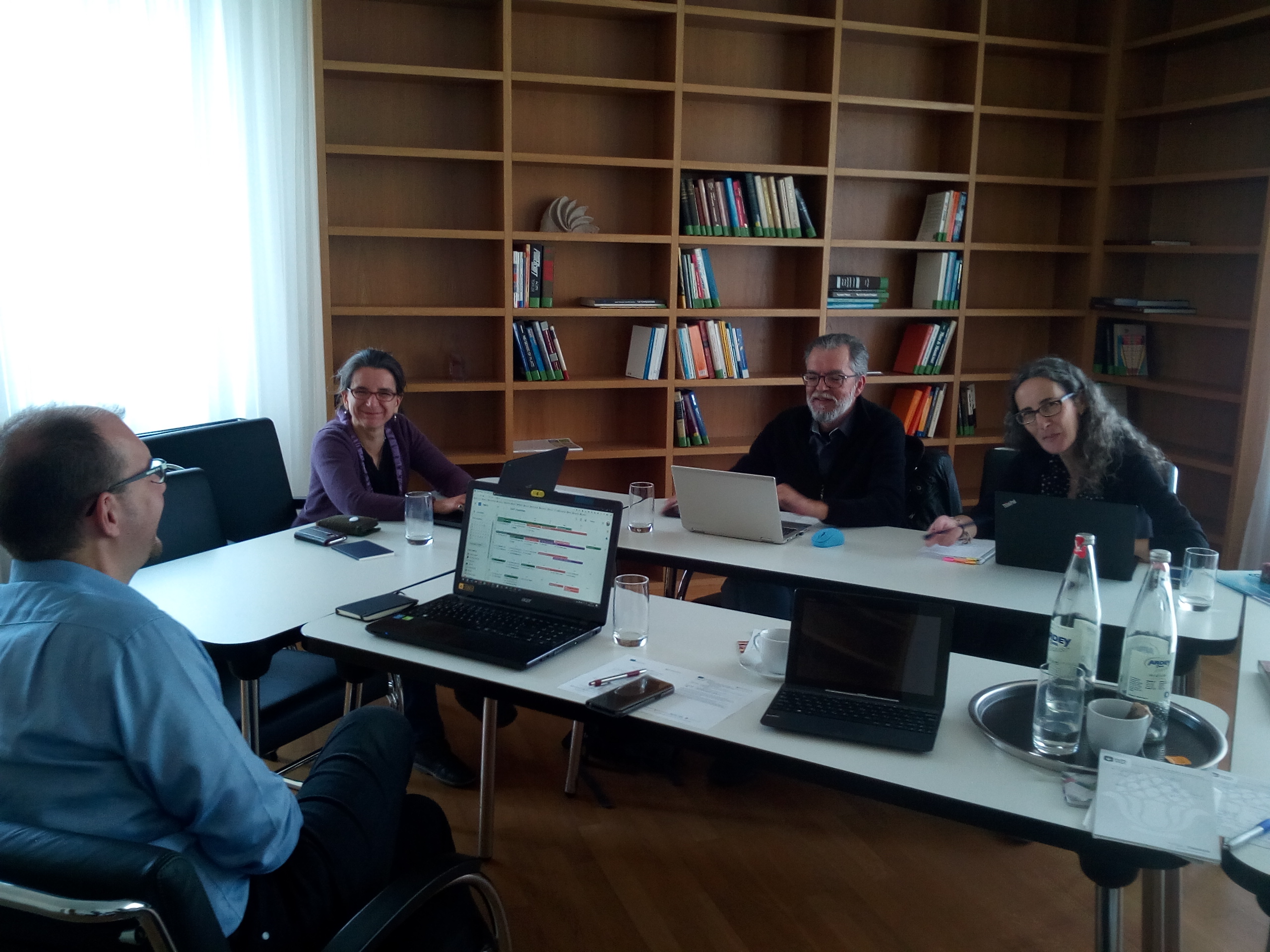
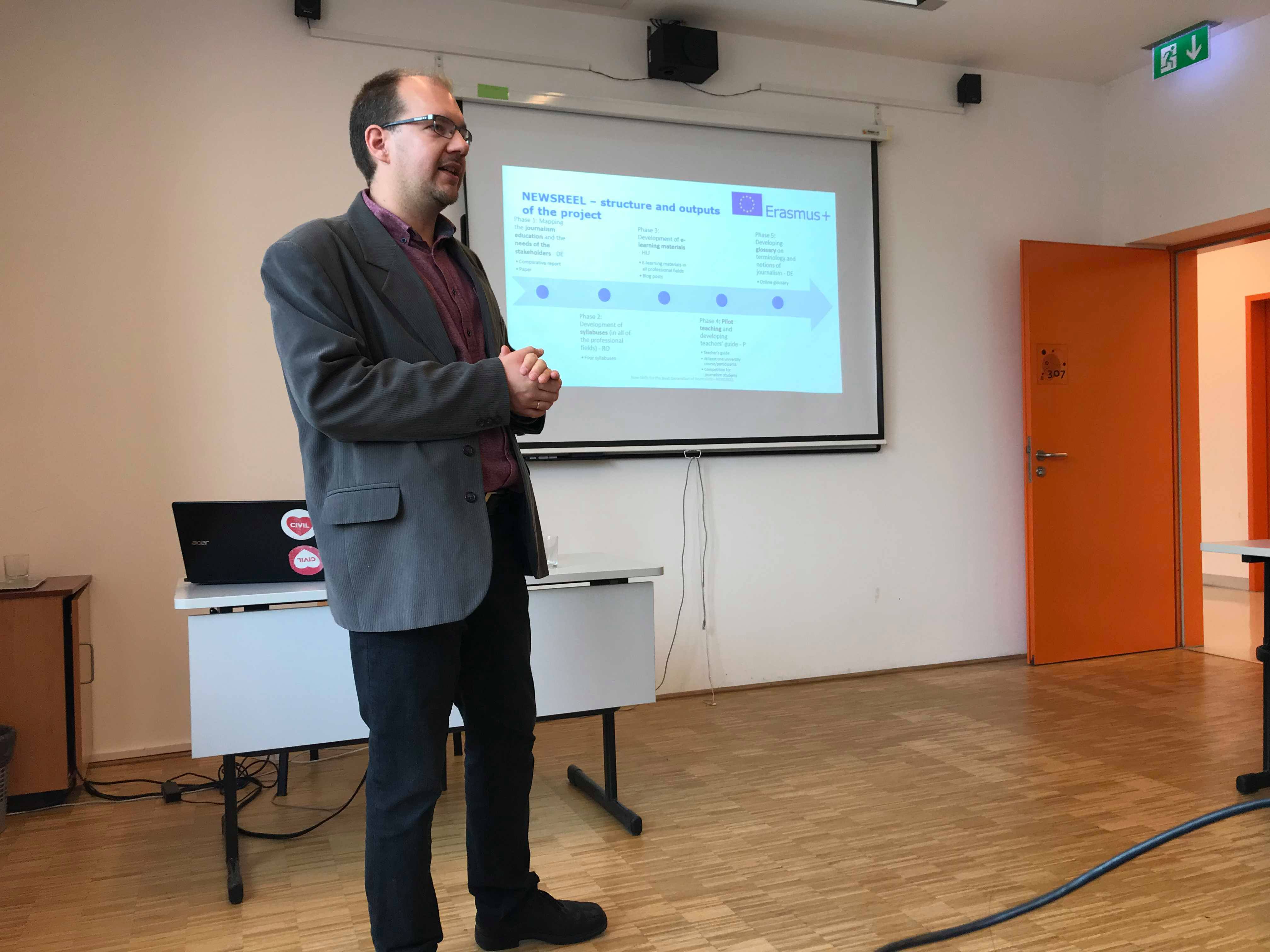
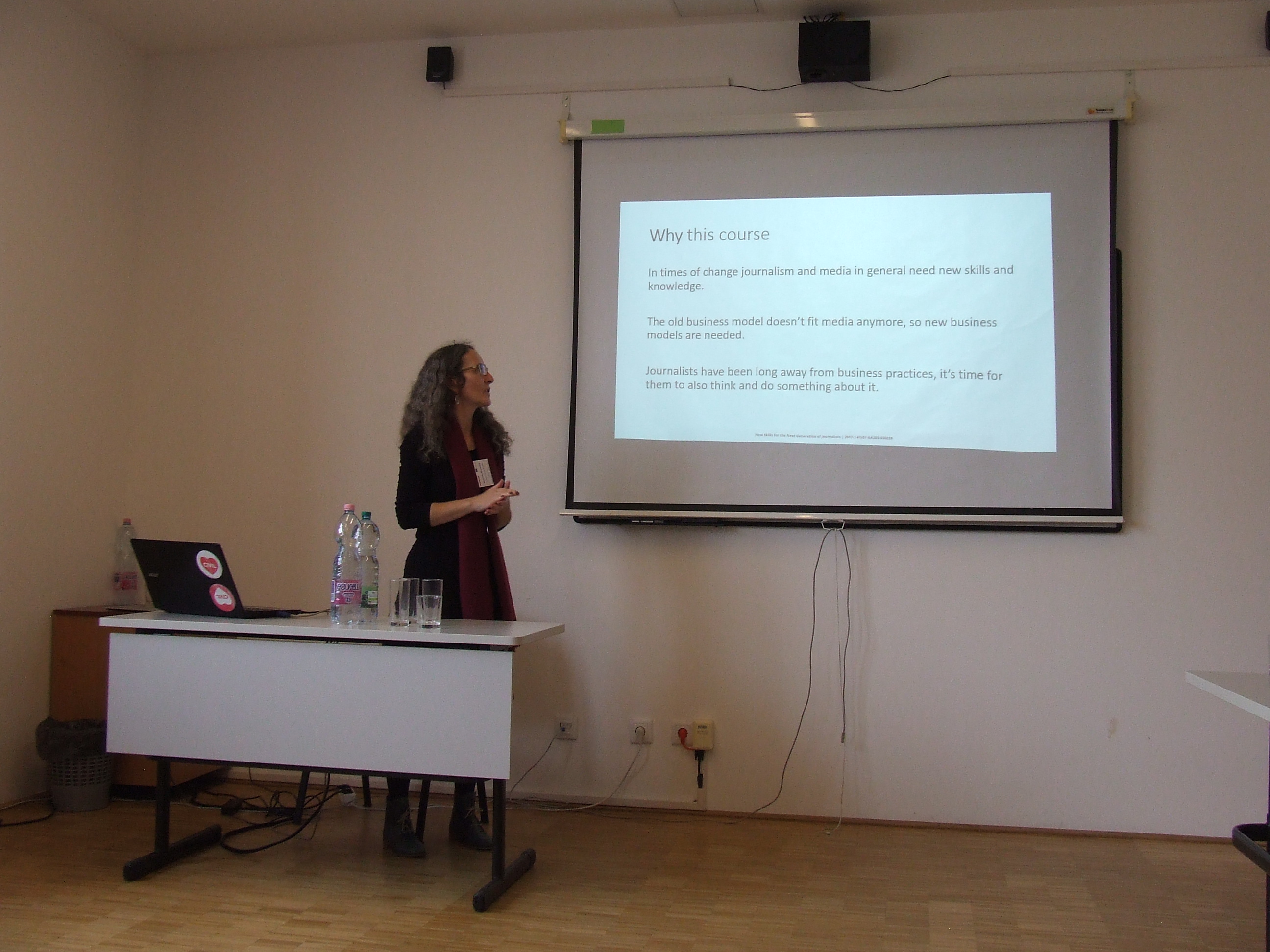
The third multiplier event of NEWSREEL with the title of How to teach digital journalism skills, took place in Pécs, Hungary on the 6th of November. The main aim of the event was introducing the e-learning materials that we developed in the third phase of the project. The materials are connected to the fields of data journalism, collaborative journalism, new business models of journalism, and the ethical challenges of the digital public sphere.
The project team was represented by:
Gábor Polyák and Annamária Torbó, University of Pécs, Hungary - Ethical challenges of the digital public sphere
Ana Pinto Martinho and Miguel Crespo, ISCTE - Lisbon University Institute, Portugal - New business models of journalism
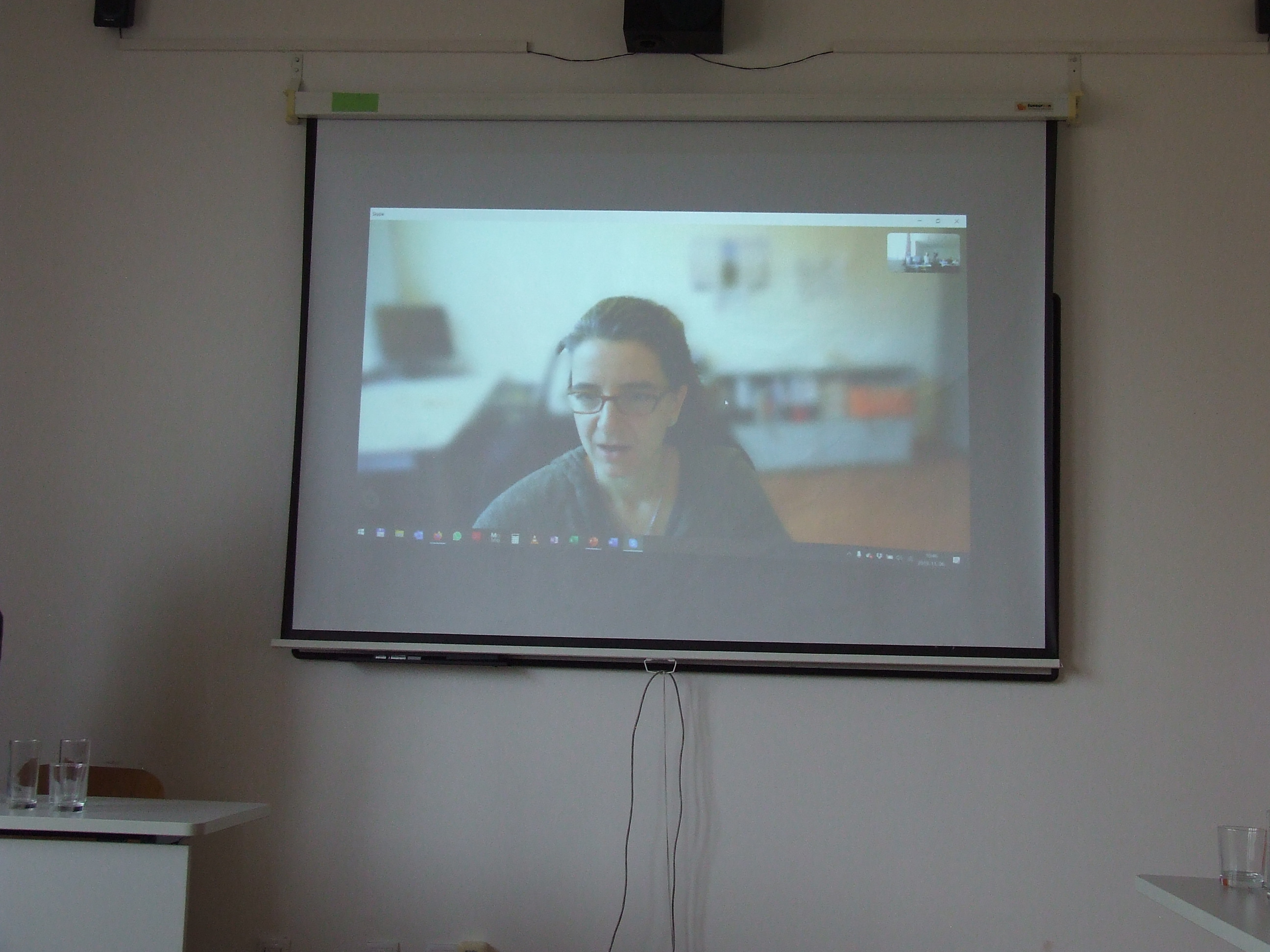
Nadia Leihs (via Skype), Erich Brost Institute, Germany - Collaborative journalism
Emilia Șercan University of Bucharest, Romania - Data journalism and data visualization
It was a pleasure that the conference was opened by András Láng, vice-dean of the Faculty of Humanities and Zsolt Szijártó, head of the Communication and Media Department from the University of Pécs. The written version ot the two welcome speeches are avaiable here:
Welcome speech by András Láng
Welcome speech by Zsolt Szijártó
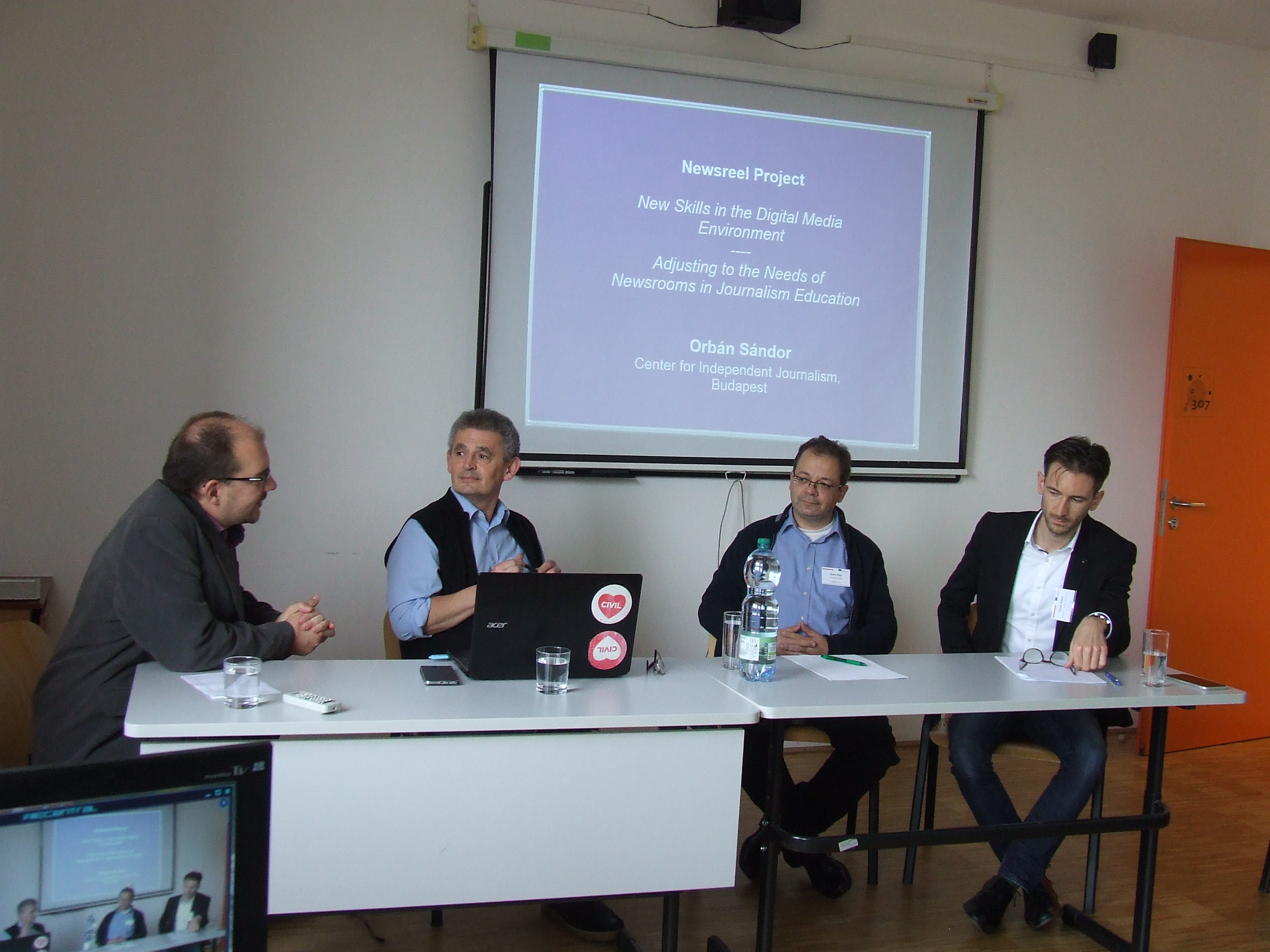
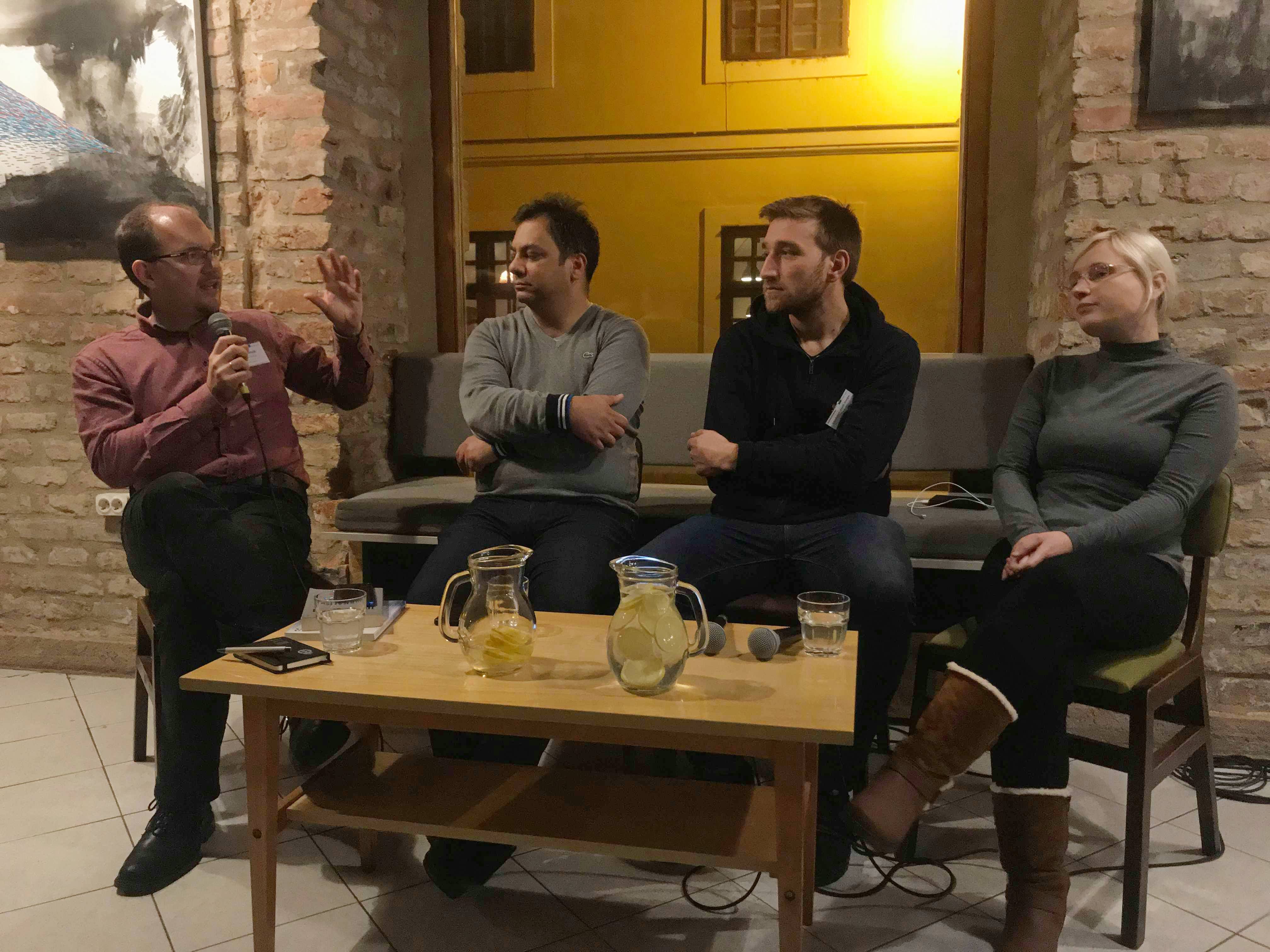
After the e-learning presentations, we organized a round table discussion on the state of journalism education and the role of new journalistic skills. Gábor Polyák moderated the conversation with our guests, Sándor Orbán from Center for Independent Journalism, Tamás Bokor from the Corvinus University of Budapest and János Nagy from the University of Pécs.
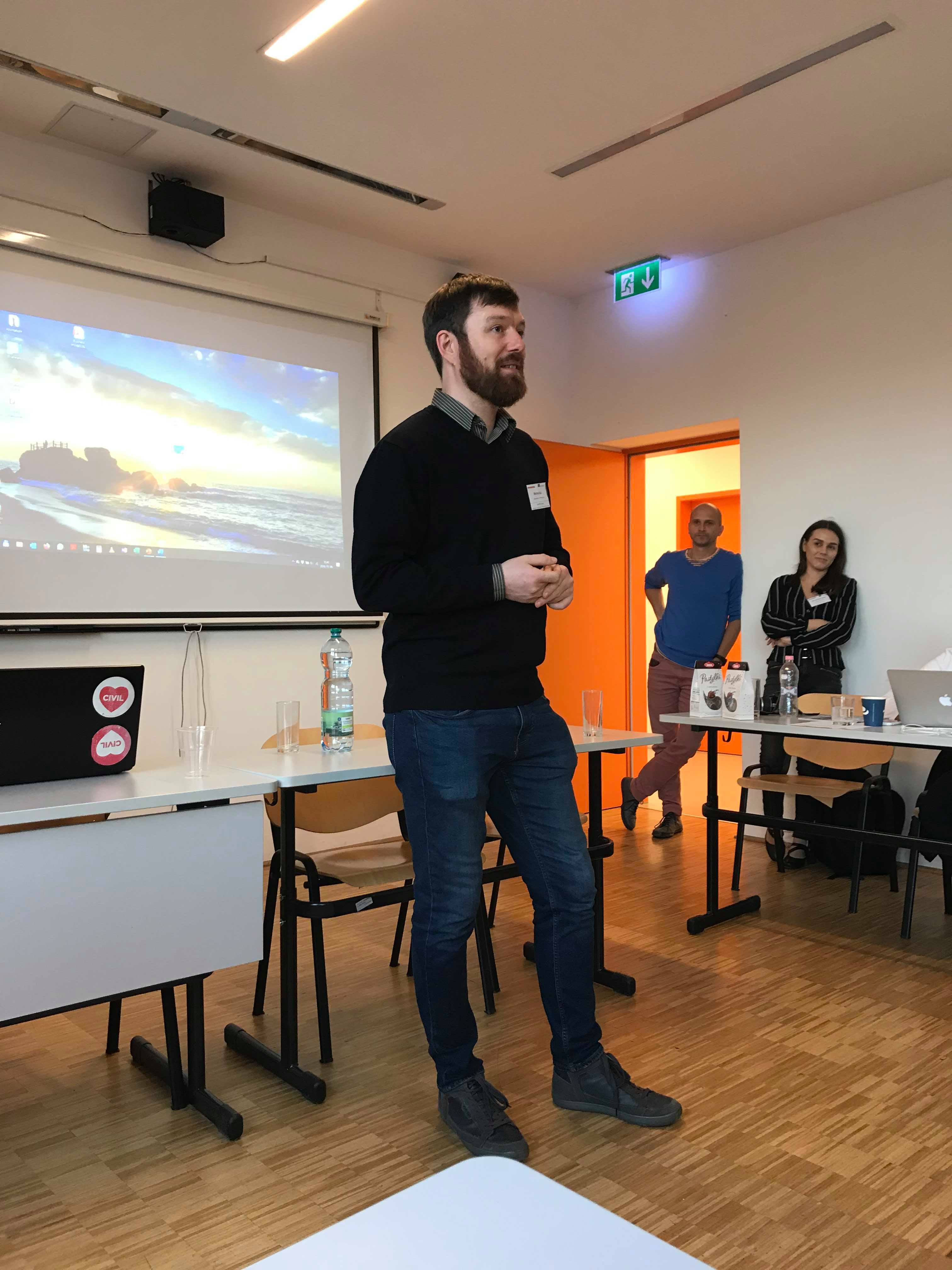
The third programme was a lecture by Michal Kus, from the University of Wroclaw, Poland. He focused on the topic of fake news and fact checking from the perspective of education.
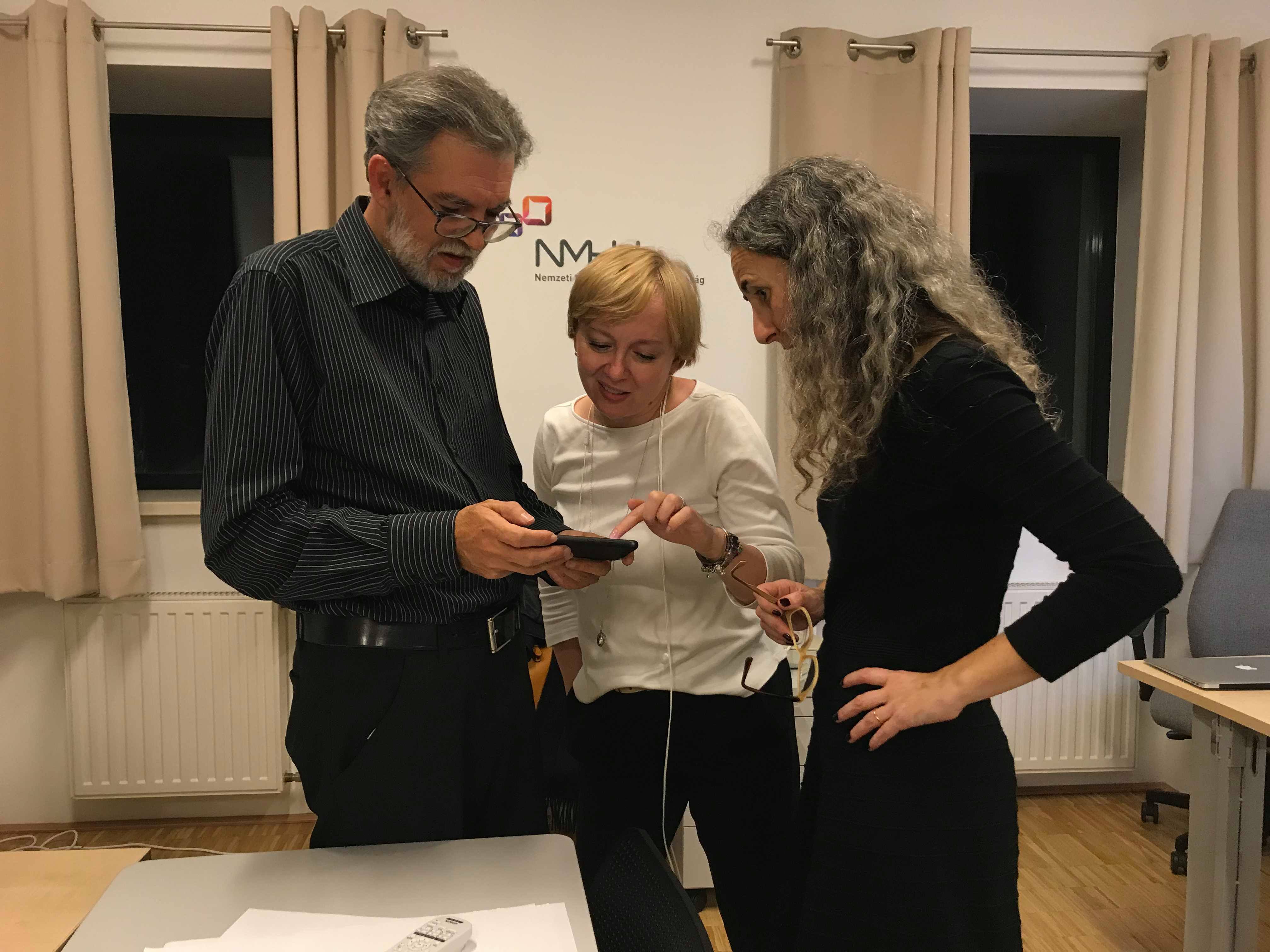
During the one-day event, students from the University of Pécs and from the HfK+G of Stuttgart had the opportunity to try and test the developed e-learning materials and give feedbacks to the representatives of the project team. The e-learning materials on the four fields will be updated in the next months.
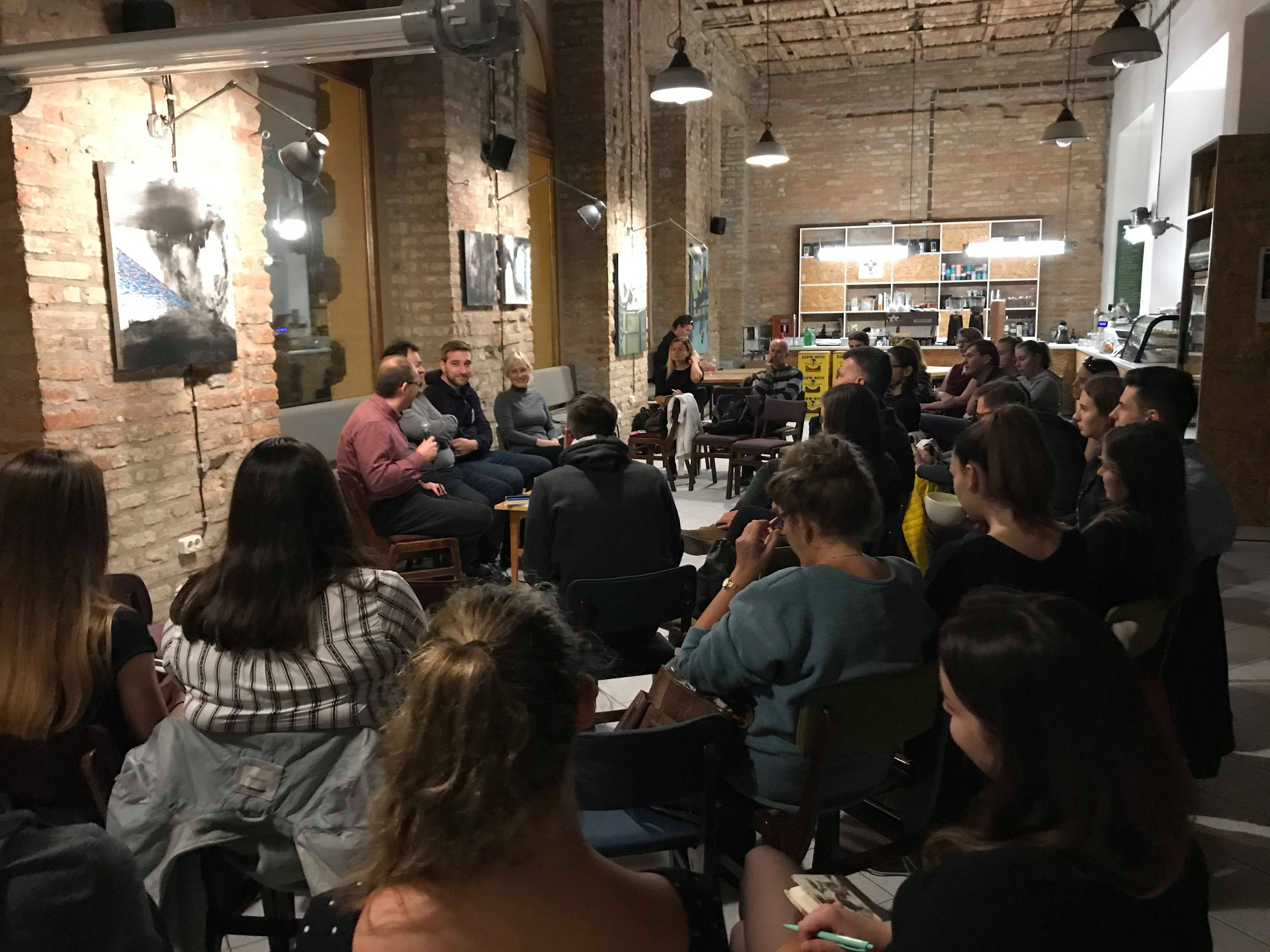
The accompanying event of the conference was a Hungarian round table discussion with journalists on the ethical aspects of digital journalism. The programme was held in Reggeli, where we also had a reception as a closure of the day.
Thank you for joining us at one of the most important event of the project!
Photos: Fanni Marxer, Boglárka Nyirádi (University of Pécs)
How to teach digital journalism skills - Rewatch the third multiplier event of NEWSREEL!
The third multiplier event of NEWSREEL took place in Pécs, Hungary on the 6th of November. During the one day event we presented the developed e-learning materials with our colleagues from Portugal, Germany and Romania. The materials are connected to four specific fields: data journalism, collaborative journalism, new business models of journalism, and the ethical challenges of the digital public sphere. Click here for the full programme, and you can rewatch the live streaming of the event here!
Presentations of the e-learning materials and round table discussion on the state of journalism education:
The lecture of Michal Kus (University of Wroclaw, Poland) on fake news and fact checking:
Transnational project meeting in Dortmund
A transnational project meeting was held at the Erich Brost Institute in Dortmund on 16th October 2019.
Durint the one-day event we discussed the next tasks of the project. One of the most important points were the e-learning materials developed by the project team. We agreed that we will publish the materials only after revision and in combination with the Teachers' guide.
We also discussed the details of the pilot teaching phase, as well as the time frame and first steps of the student's collaborative projects led by the German colleagues. Our final multiplier event will be held in Lisbon, where the best student teams are going to present their project works. The dates of the three-day event will be: 1st-3rd April, 2020. We started to plan the programme of the event.
All participants took part in a brainstorming session related to the Teachers' guide of phase4 and focused on the following questions:
- What do you need to teach a course?
- What information do you need to choose the right module?
- What do your students need to study with the e-learning modules?
The Portuguese team are responsible for the teachers' guide, therefore they will provide all partners with a suggested structure of the handbook and will put together an index. There will be one handbook with with all courses descriptions, and four smaller handbooks with specific information on the courses (for example for the model solutions to the deepening questions of the material on collaborative journalism).
We were also invited to the EJTA Teachers' Conference, where Nadia Leihs and Tina Bettels-Schwabbauer (EBI) presented their course on collaborative journalism.
The project team was represented by :
Nadia Leihs and Tina Bettels-Schwabbauer (Erich Brost Institute, Germany)
Gábor Polyák and Annamária Torbó (University of Pécs, Hungary)
Ana Pinto Martinho and Miguel Crespo (ISCTE - Lisbon University Institute, Portugal)
Unfortunately, the Roman partners couldn't manage to participate at the event.
How to teach digital journalism skills - Invitation to the third multiplier event of NEWSREEL project
Journalists have an essential role in the new media landscape as a pillar of credible and contextualized information. Being in competition with several alternatives, non-professional or even deliberately manipulated news, professional journalism should be empowered by new competencies and skills.
New Skills for the Next Generation of Journalists (NEWSREEL) is a project funded by the Erasmus+. In the project four partner organizations from four countries work together: the University of Pécs (Hungary), which is also the project leader, the Erich Brost Institute for International Journalism from TU Dortmund (Germany), the University Institute of Lisbon (Portugal) and the University of Bucharest (Romania). By improving skills of a new generation of European journalists, NEWSREEL contributes to the strengthening of the common European democratic public sphere.
In the representation of NEWSREEL team, we would like to invite you to our multiplier event that will take place in Pécs, Hungary on the 6th of November. During the one day event we will present the developed e-learning materials with our colleagues from Portugal, Germany and Romania. The materials are connected to four specific fields: data journalism, collaborative journalism, new business models of journalism, and the ethical challenges of the digital public sphere.
Date: 6th of November
Venue: Department of Communication and Media Studies, University of Pécs (Hungary)
7630 Pécs, Zsolnay Vilmos st. 16. Building E25
PROGRAMME
09:30 – 10:00 Registration
10:00 – 11: 30 Welcoming & presentation of the e-learning materials developed in the NEWSREEL project (307)
Welcome speeches:
- Dr. András Láng, vice-dean of the Faculty of Humanities, University of Pécs
- Dr. Zsolt Szijártó, head of the Department of Communication and Media Studies, University of Pécs
- Dr. Gábor Polyák, professional leader of NEWSREEL project, University of Pécs
Presentations:
- New business strategies and models of journalism (Ana Pinto Martinho & Miguel Crespo, University Institute of Lisbon, Portugal)
- Collaborative journalism (Nadia Leihs & Tina Bettels-Schwabbauer, Erich Brost Institute - TU Dortmund, Germany)
- Data journalism & data visualization (Emilia Sercan, Raluca Radu & FJSC team, University of Bucharest, Romania)
- Ethical challenges of the digital public sphere (Gábor Polyák & Annamária Torbó - University of Pécs, Hungary)
Moderator: Annamária Torbó (University of Pécs)
11:30 – 12:30 Lunch (ground floor)
12:30 – 14:00 Round-table discussion about the role of new journalistic skills in journalism education (307)
- János Nagy (University of Pécs, Hungary)
- Tamás Bokor (Corvinus University of Budapest, Hungary)
- Sándor Orbán (Center for Independent Journalism, Hungary)
Moderator: Gábor Polyák (University of Pécs)
14:00 – 14:30 Coffee break (ground floor)
14:30 – 15:30 Fake news and fact checking – A challenge for the media and journalism education – A lecture by Michal Kuś (University of Wroclaw, Poland) (307)
15:30 – 16:00 Coffee Break (ground floor)
16:00 – 17:00 Workshop – Testing the developed e-learning materials (002)
Moderated by representatives of the NEWSREEL team
The programme at the department is followed by a round-table discussion with Hungarian journalists (in Hungarian).
Venue: Reggeli
Pécs, Király u. 23-25.
18:00 – 19:30 Snowdentől az álhírekig – A digitális újságírás etikai kérdései / From Snowden to disinformation – Ethical challenges of digital journalism
- Katus Eszter (Átlátszó)
- Babos Attila (Szabad Pécs)
- Varga Christian-Zsolt (n-ost)
Moderátor: Polyák Gábor (Pécsi Tudományegyetem)
19:30 – Reception (in Reggeli)
The test version of the e-learning materials
We are happy to announce that the test version of the e-learning materials are available on the portal!
The materials are connected to the four specific fields of the project: data journalism, collaborative journalism, new business models of journalism, and the ethical challenges of the digital public sphere.
We are open to any suggestions regarding the e-learnings! All of the materials will be updated based on the feedback we get from students and professionals.
The materials can be reached here:
Data Journalism and Visualization
Collaborative Journalism
News Media Business, Innovation and Project Development
Ethical Challenges in Digital Journalism
Traditional and new business models in the Hungarian media
Is it possible in Hungary to operate media outlets only from crowdfunding? How can they get new readers, and is the Hungarian audience ready to pay for online contents? Raising our gaze further away, what Central European examples of new business models can be found, and how viable are they?
These and other similar questions were answered by journalists who gathered in Budapest at the first event of the Central Europe Club launched by Terra Recognita Foundation on April 15th. Behind the launch of the club there are two intentions: to bring together people interested in the region and to explore the most current issues of socio-economic transformation in the region.
The event with the title of ‘The bottom-up organized media: business and community building together?’ was moderated by István Kollai, assistant professor of the Corvinus University and coordinator of Terra Recognita Foundation. His discussion partners were Szilárd István Pap, editor of Mérce (Scale); Martin Bukovics, editor-in-chief of Azonnali (Instant) and István Dévényi, editor of Magyar Hang (Hungarian Voice). In this article, we look at the most essential topics of the discussion.
Community building and business development
In the introduction, all three participants explained how community building is linked to business development in their own lives. Szilárd István Pap unfolded that how Mérce became a left-wing workroom in 2014 from a blog operated by only a few journalists. The aim of the site was to convey the knowledge of people and activists working in different scientific fields. From the autumn of 2017, the portal is characterized by a more committed way of writing and, in parallel, has expanded their profile with news production. However, their real brand is live streaming, they participate in many demonstrations and broadcast them live to the public.
The Azonnali started in June 2017 with the collaboration of journalists who former worked for Mandiner, a Hungarian news portal. From June 2018, Péter Ungár, a member of the green Hungarian political party called Lehet Más a Politika owns the portal of Azonnali with a greater amount. According to Martin Bukovics this fact does not affect the content of the articles: they get a free hand in what and how to write.
István Dévényi, founder of Magyar Hang, emphasized that the foundation of the newspaper is basically the result of a forced situation. The journalists of Magyar Hang previously worked for Magyar Nemzet before the businessman, Lajos Simicska shut down the daily paper and news portal (meanwhile, the right winged Magyar Idők changed its name into Magyar Nemzet in 2019 February). The Magyar Hang operates with a classical financing model: they get money from the copies sold. With more than ten thousand copies, the Magyar Hang is in the TOP 3 of the current weekly market. It is a huge paradox that, on one hand, they are struggling every day for survival, but on the other hand, the journalists feel that this is the highest point of their professional career in terms of freedom of the press.
The situation of corporate advertisings
Corporate advertisings were first mentioned as one of the traditional models of financing journalism in Hungary. The journalist of Magyar Hang said that Heti Válasz, that earlier received significant government support, would have been able to survive only from advertisements. Then the political break-up of Orbán and Simicska (who was the owner of a media empire) has completely overwritten the situation of the Hungarian media market, resulting in a rapid decline of advertisers. Ákos Gergely Balogh, founder of Mandiner, who was in the crowd of the audience, has highlighted that typically not the companies, but their agencies advertise, and they have well-tried connections.
The editor-in-chief of Azonnali argued that the support of the agencies can be won, and the mediums need to be more persistent. They have several corporation ads, for example they get such revenue from Dacia last year. At the same time, it is not negligible that there is a financially strong investor behind them, which means that they can employ 8-9 permanent people.
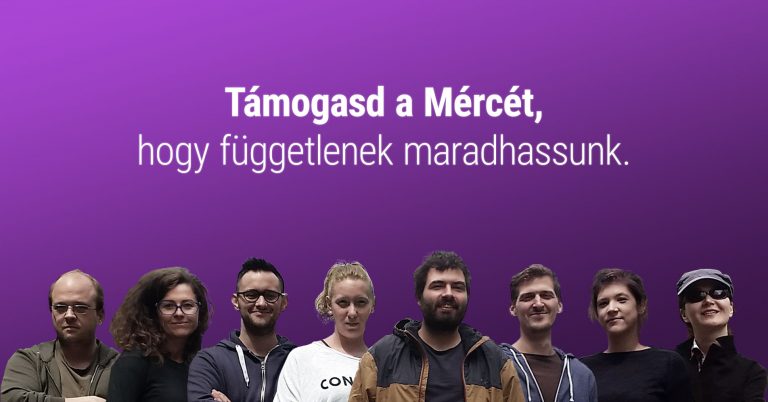
The Mérce is quite different in the case of advertisements: they have always come to the conclusion that they do not allow the placement of advertisements on their portal. They are of the opinion that only crowdfunding can give true freedom against the expectations came from the potential investors. From a global view, he believes, advertisements as a business model is not pointed towards long-term sustainability, and compare their model to The Guardian, which also targets its readership with their sponsorship campaign.
What kind of articles does the audience need?
According to Bukovics, one of the most progressive mediums in the region is the Romanian Recorder, that works with tremendous staff and produce videos in English that have millions of views. Although the Romanian market is undoubtedly bigger, therefore there are more optional press products and the credibility is greater as well. Azonnali would like to move into the direction of Recorder in the near future.
At the same time, the editor of the Magyar Hang stressed that the future is not just the online contents. He also sees that the ‘audience in the middle’ imagined by many journalists does not exist in practice. Most of the people want to struggle on their own public side for their favorite media, and there are distortions in Hungary that are very difficult to overcome.
According to Bukovics, there is still a middle, and for example he mentioned one of the most read articles of Azonnali, where they introduced both governmental and oppositional statements connected to a recent modification of the Hungarian labour code, and also examined how they are related to the actual written text of the law . According to Dévényi from Magyar Hang, there can be exceptions, but these cannot be set up as a working model.
Would the audience be willing to pay for online contents?
The moderator drew up this issue with a Slovak example, where a significance amount of the online news media made their contents available behind a national paywall in 2011. According to him, a similar idea came up in Hungary around 2012, which then fell partly on the resistance of Index, the biggest Hungarian news portal. Would it be possible now to have such kind of cooperation between the Hungarian mediums?

A question arose immediately: for what exactly should be paid, for all the media or just one medium, perhaps could the users choose their own portfolios? The 444 (another popular Hungarian news portal) will soon implement a subscription model that everyone is waiting for with intense curiosity. The Válasz Online operates with different support levels, and according to the monthly rate of support, someone can be a bronze, silver or gold sponsor (the Direkt36 investigative portal operates in a similar way). The model of Élet és Irodalom (a weekly that covers literary and public life, also as an online portal) is unique in the Hungarian market: readers have to watch advertisements before each article, but since the articles cannot be shared, they can have only a limited audience.
According to Pap from Mérce, if the subscription market meant just the non-governmental media, it would be a very unequal situation: readers might not subscribe if they could get the contents for free from the governmental media. By the way, the model has not been successful in Slovakia: the major stakeholders have gradually stepped out of it, seeking greater flexibility.
Connected to the survey of the Reuters Institute and the University of Oxford, Pap pointed out that there is a greater number of potential sponsors than the actual subscribers. This also means that there is still potential for growth, according to him, even in Hungary. His opinion is that, the right to information is the same for everyone, so he would not work for a medium that makes some of their contents available only for subscribers.
The future of European news media
The last topic was whether the public will be still so fragmented ten years later, moreover will the small, quick editorials or the dominant mediums win? The participants believe this is depended largely on politics.
According to the editor of the Magyar Hang, the small, flexible newsrooms seem to be more sustainable. Pap from Mérce mentioned his favorite Western press product, The Intercept. One of the editors of the portal left The Guardian for this sustainable online news portal. He argued that the press needs capital and the capital is basically not here, so he does not think that this kind of fragmentation would change in the foreseeable future.
At the end of the round table discussion, Dévényi from Magyar Hang highlighted the problem that in the case of Hungarian community funding, we can probably talk about the same group of the audience as supporters for each medium. This is by no means sustainable in the long run.
Featured image: Terra Recognita Foundation (from the Facebook event)
Photo: former site of Mérce
Coins: Pixabay
The first entries of the glossary are available!
As a result of Phase 5, we will have a free accessible online glossary in English, that helps to build a common knowledge base. Because of the novelty of the elaborated information and competences, there is no common framework of notions and terminology.
The structure of the glossary follows the fields of the syllabi and the e-learning materials, therefore it includes the most important terms of data journalism, collaborative journalism, business models of journalism and ethical challenges connected to digitalization.
The entries that are available now:
| Collaborative journalism | Crowdfunding |
Fake news | Open data |
| Copyright | Data mining | Freemium |
Public sphere |
| Cross-border journalism | Fact checking | Journalism education | Skills (journalistic skills) |
We will update the glossary continuously with other expressions!
New media, new ethics? – The significance of ethical questions in journalism in the NEWSREEL countries
The technological developments emerging with new media had a huge impact not just on journalistic practise, but on the ethical aspects of journalism as well. The new challenges include issues like the increasing amount of fake news, dealing with hate speech in the comments, linking contents from other sources or how to handle anonymous sources. In parallel, media accountability and transparency become more and more essential.
Ethical questions in the media
Fake news is the most prominent problem
The interviews revealed that the main ethical issues are more or less the same in all four NEWSREEL countries. Among them fake news is the most burning problem, moreover, in Romania and Hungary the phenomenon is in strong connection with political communication. Social media like Facebook are abounding in fake news and click baiting content, which is another problematic aspect of journalism ethics. Fact checking should be a priority, and we can find many good examples in Germany, where several media outlets and NGO have set up fact checking teams. Since 2017, Correctiv has partnered with Facebook to fact-check content shared on their network. In contrast, the only Hungarian fact-checking website is operated by the think tank of the governing party.
Being the first one to publish
Several interviewed journalists mentioned the pressure to be among the first mediums that publish a story. As Portuguese lecturer António Granado said, in many cases, newsrooms do not produce their own content but just copy and replicate content from news agencies – and it is confirmed by practising journalists as well.
Attila Bátorfy stated that the establishment of a comprehensive ethical code should be important, but it is very rare at Hungarian newspapers, and news competition often overwrites all other aspects. In Portugal, the ethical worries have resulted in a review of the journalists’ ethical code, led by the Portuguese journalists’ union.
The case of whistleblowing
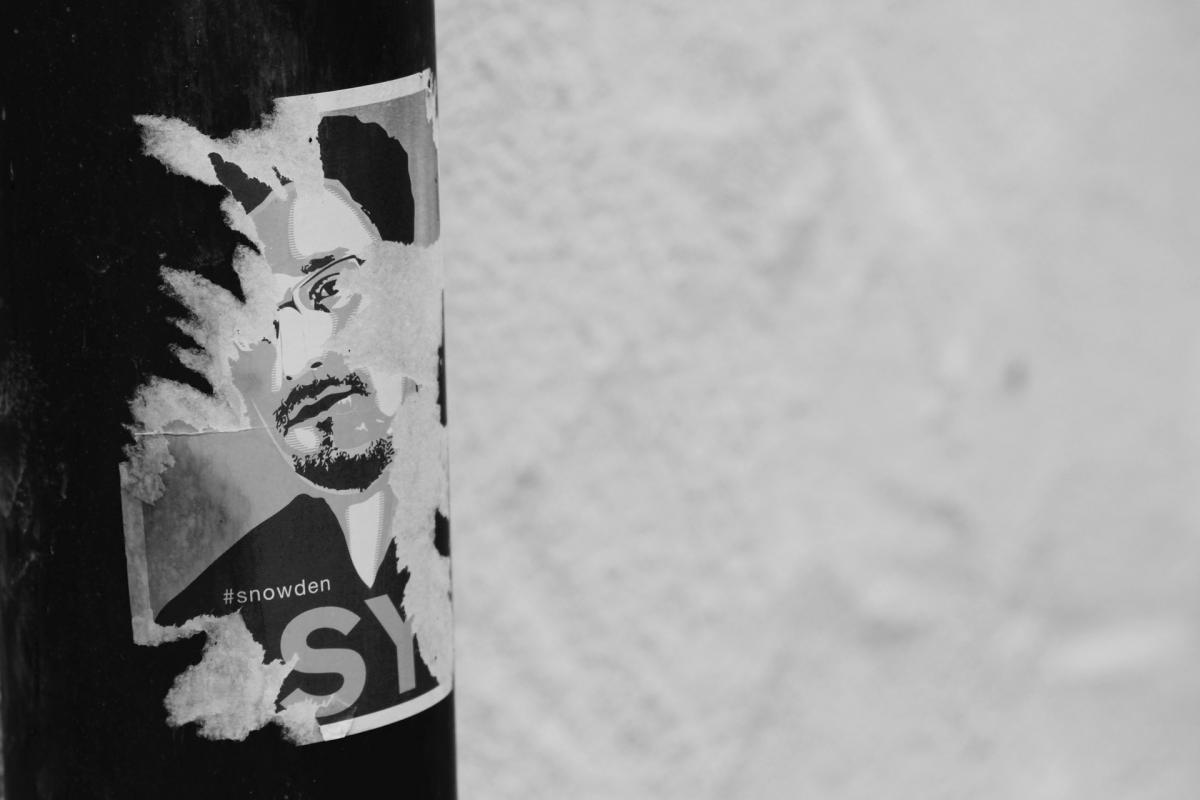
In recent years, whistleblowing has become another essential subject for journalists. We all remember the story of Edward Snowden, but the Panama Papers were also released by a whistleblower – an insider who exposes corrupt or illegal activities. However, German interviewees highlighted that whistleblowing is not a completely new phenomenon, and the only key change is that messages from whistleblowers are digitally encrypted now. According to Hungarian journalist, Anita Vorák, the way of handling anonymous sources is a very significant ethical issue, because nowadays Hungarians release information to journalists only anonymously.
Ethical questions in journalism education
All analysed institutions offer courses on media ethics. Typically, there are two types of courses covering this issue: general media ethics and specific courses dealing with journalistic ethics.
Deontology is important in Romania and Portugal
All Romanian programmes discuss the new challenges that have arrived with digitalization during courses that teach media ethics in general. As Gabriel Hasmațuch from the Lucian Blaga University stated, a huge problem is that their students who work in the local media said that people in the media advised them “to forget all the rubbish that they learned in school, to forget ethics.” Some examples of courses are ‘Public communication ethics’ (University of Bucharest), ‘Ethics and professional deontology’ (Babeș-Bolyai University), and ‘Ethics and deontology in journalism’ (Spiru Haret University). Deontology of journalism is a subject geared to reflection upon and critical analysis of the media's function from the perspective of ethics and professional deontology.
It seems, deontology is also an important aspect of journalistic ethics in Portugal, where some university courses also focus on this field, like the ’Critical Studies and Media Deontology’. According to António Granado from the Nova University, graduates don’t apply their acquired knowledge in their job, because “what they learn about ethics has no practical use”.
Specific courses in Hungary and Germany
In Hungary, there have been general media law and media ethics courses integrated into the curricula for a long time in every analysed institution. Media law and media ethics are taught together in the University of Pécs, Debrecen and at the Pázmány Péter Catholic University. Moreover, the University of Pécs often organise workshops related to these topics in cooperation with Mertek Media Monitor. Specific ethical courses for journalism students are available at the University of Szeged and at Eötvös Loránd University. ‘Legal background of journalism, legal and ethics question in practice’ is a compulsory course for students in Szeged who have chosen the specialisation in print, while at Eötvös Loránd one of the interesting initiatives is a seminar on press freedom, where students analyse the situation of the media in Hungary.
Apart from Stuttgart, all German department focus on journalistic ethics and challenges connected to digital media. They also have courses that cover media ethics in general or deal with only one specific aspect. Some issues discussed in these courses: the responsible use of content from social networks and tools for fact checking. These topics also arise during news production in workshops and teaching newsrooms. Marlis Prinzing (Macromedia University) and Klaus Meier (Catholic University Eichstätt-Ingolstadt) are of the opinion that lecturers need to expand their students’ knowledge concerning journalistic ethics. At the Macromedia University the course ‘Media and business ethics’ is compulsory, while at Eichstätt the course on ethics will be mandatory soon.
Journalism education vs. journalistic practise
The research report underlined how essential is the field of media and journalistic ethics in the analysed higher educational institutions. However, it seems that there is a strange contrast between journalism education and journalistic work: on one hand, some journalists complained about that ethical questions are neglected in the university programmes, and believe this is one of the reasons of the lack of ethical aspects in the work of newsrooms. While on the other hand, some educators have bad experiences on the attitude of media workers, who encourage their students to forget the ethics they have learnt at the university. Of course, there are differences everywhere, but it is sure that journalism educators and media workers should build more bridges between the theory and practise of journalistic ethics.
You can find the full sample of the universities in our research report (page 40-43). If you would like to read more about ethical challenges in the partner countries, check our report as well.
Featured image: Marco Verch (Flickr)
Snowden image: Pixabay
Social media image:mkhmarketing (Flickr)
Code of ethics image: Nick Youngson (Picpedia)
Pagination
- Page 1
- Next page