2021

Reporting migration and forced displacement: What practitioners expect from journalism training
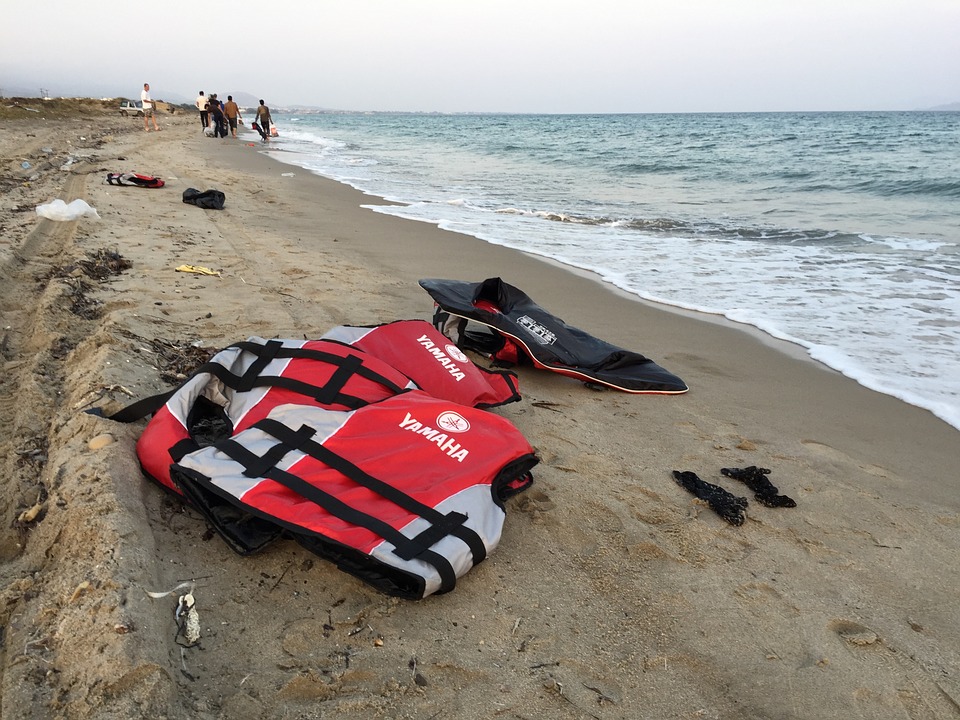
Worldwide, unprecedented numbers of people are on the move: In 2020, over 280 million people globally were migrants and refugees, an increase of almost 130 million people compared to 1990, according to the Migration Data Portal run by the International Organization for Migration (IOM). Migration and forced displacement are thus a crucial issue for journalism globally. But what do seasoned migration reporters expect from journalism education, whether university-based or at further education institutes? A recent study sheds light on their wishes.

To get inspiration for journalism training, four reporters from the Czech Republic, Germany, Hungary, and Portugal have been interviewed in spring 2021 in the framework of the EU-funded project NEWSREEL2 – New Teaching Fields for the Next Generation of Journalists. All of them have been reporting migration and forced displacement from an international angle, including research trips to Sub-Saharan Africa or Mediterranean countries.

The interviewees pointed to several shortcomings in international reporting about issues of migration and forced displacement, which map the agenda for a greater attention on this issue in journalism training. These include a rather elite-centred stance over-focussing on politicians and experts than giving voice to migrants and refugees themselves, as well as a focus on crises and cyclical attention rather than permanent coverage and long-term perspectives. “For me, important and interesting stories are those that show a longer time frame, where you don’t only catch up with people in the moment of crisis”, says Tomáš Lindner, Editor at the Czech weekly Respekt.

Even though migration is a “phenomenon that won't stop”, according to Catarina Santos from Portuguese online newspaper Observador, “there are no conditions at most of the newsrooms to have a journalist that is paying attention to this with the frequency that we should have”. While journalism education might have rather low impact on newsroom resources, it can though sensitize for reporting on migration and forced displacement.

The importance of correct terminologies

Tellingly, none of the interviewees had received any specific training related to that particular field during his or her career. While they agreed that some skills are impossible to “learn” within a classroom and need to be developed on the ground, they did point out that issues such as the professional ethics of covering migration and forced displacement as well as political, legal and geographic background knowledge would be quintessential for training.

One crucial point, according to the interviewees, is correct wording, as implied by using the terms “migration and forced displacement” and “migrants and refugees” distinctively rather than confoundingly. Classes preparing future or current journalists for reporting on the field should thus teach the legal frameworks underlying global migrant and refugee policies. These are complex; in a very basic definition, refugees are forced to leave their homes due to persecution, whereas migrants leave voluntarily – which does not mean that they do not have sound reasons to depart.

Our interviewees mentioned role conflicts that might arise when reporting about migration and forced displacement, challenging the self-positioning of journalists as neutral observers, such as being asked for money or other kinds of support from the people you report about. “It is a completely understandable survival strategy from them. But you really have to say no to this in my opinion”, Eszter Neuberger from Hungarian news portal 444.hu states.

Dealing with trauma

While such situations might be typical of any reporting on people in need, it is crucial to consider these ethically challenging situations during training. Catarina Santos recommends journalists to be transparent about their role just from the beginning of an interview with a migrant or refugee, to immediately respond to any hopes and expectations they might have in terms of getting support. Also, Julia Amberger, a German freelance reporter, suggests making clear which kind of support she as a journalist could offer, if any at all: “I can draw attention to your case, but I can’t solve it.”

Dealing with traumatized interviewees is another issue which could be integrated into teaching. “You simply need a lot of empathy. And I think you cannot really learn that, but if you deal with the psychological situation of these people in a seminar, this will help you to understand situations better”, says Julia Amberger, who suggests inviting a psychologist to the classroom on that purpose.

In reporting migration and forced displacement, NGOs or major international intergovernmental organizations do play an important role as sources of information, agenda-setters, and door-openers to sites of interest such as refugee camps. However, this may result in journalists to over-rely on the support of these organizations and a tendency to take on their framing rather than critically accompanying their role. This seems all the more true when reporters are sent to foreign countries they barely know for only a few days or even weeks.

Press trips organized by NGOs or foundations represent a welcome opportunity to fund travel in times of shrinking newsroom resources. Our interviewees though described such trips and the reliance on organizations as a double-edged sword, advising to stay for a few more days after the end of the official trip to research on one’s own and catch alternative viewpoints. As an alternative to relying on organizations, Julia Amberger recommends working with local journalists and live with locals in, let’s say, an AirBnB accommodation. Such encounters help her to reflect and understand what she experiences on the ground. This type of hands-on advice could also be integrated into journalism classes focussing on the issue, including hints on funding opportunities for reporting from foreign countries and how to apply for them, as Eszter Neuberger suggests.

Summing up, our interviews underline that journalism teachers should handle the terminologies of migration and forced displacement with care and pass on this thoroughness to their students. Journalism schools should prepare for the ethical dilemma reporters dealing with the issue often face, alongside informing about the traumatising experience of migrants and refugees. Teaching the political, legal and socioeconomic backgrounds, along with the cultural and psychological sensitivity needed would help to prepare young professionals to cover the issue responsibly. Certainly, the topic of migration and forced displacement would deserve greater attention in journalism curricula.

The full reports of the study are available within the recently published NEWSREEL2 research report.

This article was written by Dominik Speck (Erich Brost Institute).

Photo: Pixabay
The syllabi of the nine professional fields are available

During phase2 of the project we developed curricula in order to establish the structure of the e-learning materials and embed these skills and tools into the programmes of journalism studies.

Each partner university has developed one or two syllabi, and as a result of that we have 9 syllabi in the following professional fields:

  • Storytelling in social media and Graphic journalism by the University of Pécs,
  • Improving democratic sensibility by the Masaryk University,
  • Covering migration and Foreign coverage by the Erich Brost Institute,
  • Journalism for voice-activated assistants and devices and AI and journalism, robot journalism and algorithms by the ISCTE University Institute of Lisbon,
  • Verifying and analysing fake news and Debunking disinformation by the University of Bucharest.

The course descriptions include
- the structure of the professional & academic content of the courses concerned,
- specific abilities (what do we want students to be able to do)
- discipline’s objectives (related to developing abilities and competencies)
- suggestions for ECTS credits & workload description,
- brief descriptions and teaching methods of every lesson,
- evaluation forms,

- a list of the compulsory and additional literatures.

The syllabi can be downloaded from here:


 Storytelling
in social media
(University of Pécs)

 Graphic
journalism
(University of Pécs)

 Improving
democratic sensibility
(Masaryk University)

 Covering
migration
(Erich Brost Institute)

 Foreign
coverage
(Erich Brost Institute)

 Journalism
for voice-activated assistants and devices
(University Institute of Lisbon)

 AI and journalism,
robot journalism and algorithms
(University Institute of Lisbon)

Verifying and analysing
fake news
(University of Bucharest)

 Debunking
disinformation
(University of Bucharest)

The first personal events of NEWSREEL2

The first personal events of the NEWSREEL2 project took place at the Department of Communication and Media Studies, University of Pécs, Hungary on 30th September and 1st October 2021.

On 30th September, a transnational project meeting was held where the project members discussed the ongoing and upcoming phases of the project. Some of the partners could only join online, via Zoom, but it was not a problem to have a fruitful discussion.

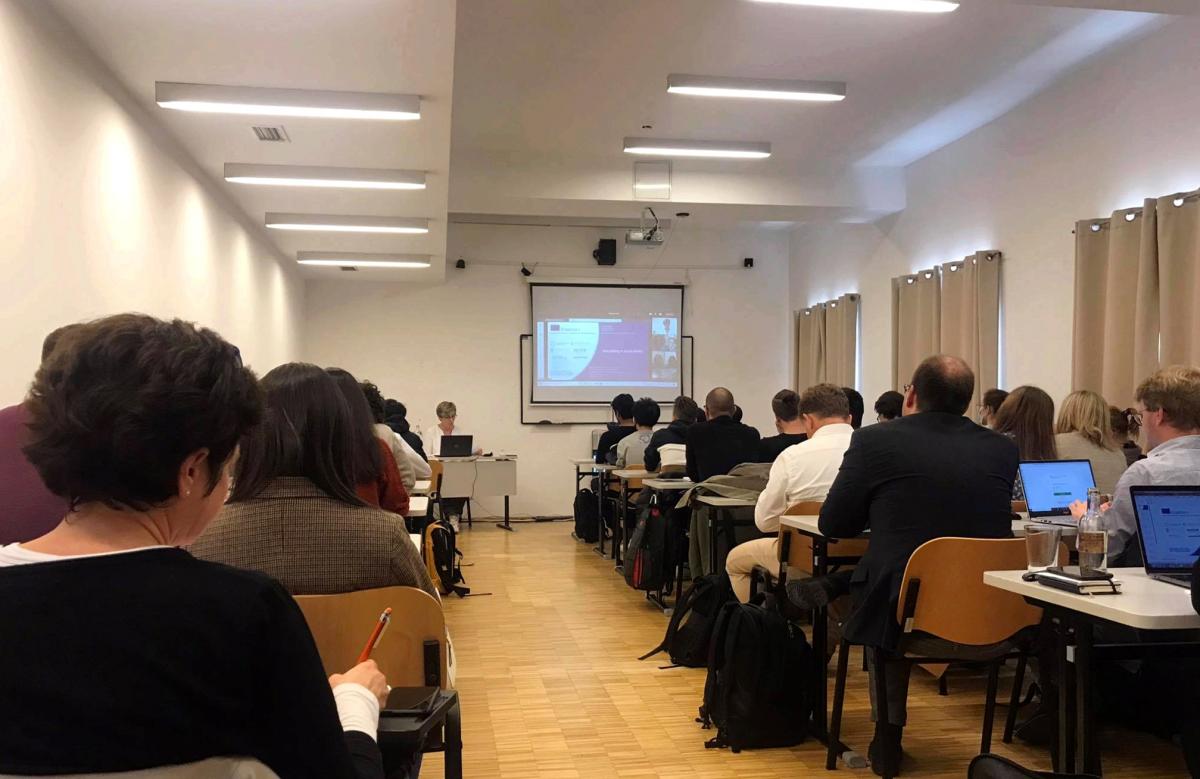
On 1st October, the first multiplier event with the title of What should we teach future journalists? took place, where the project partners presented the result of the first phase, the research report. Five from the nine professional fields were introduced: storytelling in social media; improving democratic sensibility; covering migration; AI and journalism, robot journalism and algorithms; debunking disinformation.

It was a pleasure that the conference was opened by Gyula Maksa, head of the Communication and Media Department from the University of Pécs, who is also a member of the NEWSREEL2 project. Another welcome speech was given by Gábor Polyák, head of the previous NEWSREEL project.

After the welcome speeches, Annamária Torbó head of NEWSREEL2 introduced the project and gave some general information on the research report.

Rita Glózer from the University of Pécs presented the findings on her field, which is storytelling in social media.

The Masaryk University were represented by Lenka Waschková Císařová and Klára Smejkal, the former one shared the results on their respective area, improving democratic sensibility.

Dominik Speck was present in the name of the Erich Brost Institute from TU Dortmund, and described the outcomes on covering migration.

The Romanian and Portuguese partners joined the event online. The University of Bucharest was represented by Raluca Radu, Manuela Preoteasa, and Antonia Matei. Raluca Radu held the presentation connected to the field of debunking disnformation, while Ana Pinto Martinho from the University Institute of Lisbon shared the research results on AI and journalism, robot journalism and algorithms.

The presentations were followed by a round table discussion on the connection of current social issues and journalism education. Gábor Polyák moderated the interesting discussion with our invited guests, Judit Barta from the McDaniel College Budapest, and Gábor Győrffy from the Babeş-Bolyai University. Lenka Waschková Císařová and Dominik Speck from the team of NEWSREEL also joined the conversation.

The active audience of the multiplier event consisted of many colleagues mainly from other Hungarian universities and the international students of the University of Pécs.

After the professional programmes, we had a reception at the department as a closure of the day to which everyone was invited.

Thank you for joining us at the first dissemination event of the NEWSREEL2 project!

Invitation to the first multiplier event of the NEWSREEL2 project

In the representation of NEWSREEL2 team, we would like to invite you to the first multiplier event of the project that will take place at the Department of Communication and Media Studies, University of Pécs, Hungary on the 1st of October.

During the half-day event the project team will present the results of the first output of the project. The research report is based on reviews of the relevant literature and industry information of  each project field as well as the results of interviews connected to the specific fields.

The project partners will introduce the findings on 5 fields - each partner one of their respective areas. The fields that will be presented:

  • Storytelling in social media (University of Pécs)
  • Improving democratic sensibility (Masaryk University)
  • Covering migration (Erich Brost Institute - TU Dortmund)
  • AI and journalism, robot journalism and algorithms (ISCTE-University Institute of Lisbon)
  • Debunking disinformation (University of Bucharest)

After the presentations there will be a round-table discussion on the connection of current social issues and journalism education. You can reach the full program by clicking here.

We welcome anyone who is interested in the above-mentioned topics!


The Research Report of NEWSREEL2 is available!

For the second time, our project consortium sets out to explore the need for innovation in a variety of fields of journalism education. Our first EU-funded project NEWSREEL - New Skills for the Next Generation of Journalists focused on four fields – data journalism, collaborative journalism, innovative business models and ethical challenges of the digital public sphere. Following the research stage of the NEWSREEL project, the team developed journalism and media curricula and e-learning materials.

NEWSREEL2 - New Teaching Fields for the Next Generation of Journalists widens the scope with nine additional fields: Storytelling in social media; Graphic journalism; Improving democratic sensibility; Covering migration; Foreign coverage; Journalism for voice-activated assistants and devices; AI and journalism, robot journalism and algorithms; Verifying and analysing fake news; Debunking disinformation.

The aim of this research was to introduce the new project fields in more depth and lay the foundations of the curricula and e-learning development. In the report we covered:

- the current status of these types of new skills and tools of journalism in the media field of the partner countries,
- the main media outlets and journalists that are using these skills and tools, some outstanding examples of these types of journalism,
- the needs of journalists and market players regarding the innovations in journalism education.

Therefore, we made an analysis of literature on the given topics, and interviews with four or five journalists per field from the participating countries. The interviews were based on a semi-structured interview guide consisting of both field-specific questions and a set of education-related questions, which were the same across all fields. We interviewed 41 journalists between March and June 2021, either via video calls or in written form through email-based questionnaires. 

The results will help our consortium throughout the next steps of our project, as this research report is the outcome of just the first phase of NEWSREEL2.

You can reach the full research report by clicking on the picture. 

Title photo: Judith Wiesrecker

NEWSREEL continues!

We are very happy to announce that the work that we have started in NEWSREEL continues in another Erasmus+ project, NEWSREEL2!

The primary goal of NEWSREEL2 - New Teaching Fields for the Next Generation of Journalists is to improve such skills of a new generation of European journalists that are connected to the use of digital communication opportunities in a creative and responsible way for enhancing social benefits of the digital era. The project is the extension of the Erasmus+ KA2 project NEWSREEL - New Skills for the Next Generation of Journalists.

Creative and responsible use of digital tools is an indispensable ability of journalists. They should remain reliable and trustworthy sources of news in the digital noise to counterpoint the unverified information that affects the raw emotions and temper of the audience. To achieve these objectives, in the framework of NEWSREEL2, we will develop innovative teaching methods and materials for media and journalism students on the fields of:

  1. Storytelling in social media in order to students learn how to present journalistic contents on social media networks;

  2. Graphic journalism to get to know the basic tools and subgenres of comics journalism;

  3. Improving democratic sensibility to be aware their social role and responsibility in a democratic society of the digital age;

  4. Covering migration to improve their research and reporting skills, and understanding migration in a global context;

  5. Foreign coverage to be able to contribute to a more balanced coverage of international topics;

  6. Journalism for voice-activated assistants and devices to learn how to use them and see the potential that they can bring to newsrooms;

  7. AI and journalism, robot journalism and algorithms to know how it can be used, and see clearly its potential and threats;

  8. Verifying and analysing fake news to be able to identify information and opinion going viral and to verify information with the help of suitable tools and softwares;

  9. Debunking disinformation to get solid knowledge regarding the mechanisms used for debunking fake news and disinformation.

 
Regarding these fields, the methodology used in the project's implementation phase is based on the following 7 steps process (similarly to NEWSREEL):

1. Conducting a research to introduce the current status of the new type of skills and tools of journalism and the needs of the stakeholders;

2. Developing curricula in order to establish the structure of the e-learning materials and embed these skills and tools into the programmes of journalism studies;

3. Developing electronic learning materials and teaching methods primarily for blended learning university courses;

4. Organizing a summer school with interactive workshops on the project fields, with the aim students work together on journalistic projects in multinational teams;

5. Having courses at the participating universities as a pilot teaching activity;

6. Publishing a teaching guide with dedicated chapters to the specific courses, that summarizes the professional and methodological content of the project;

7. Publishing an online glossary that helps to build a common knowledge base and cover all of our professional fields.


Furthermore, the project aims to facilitate an efficient international cooperation primarily between university-based journalistic ecosystems. Therefore, NEWSREEL2 will be implemented by

- the Department of Communication and Media Studies at the University of Pécs (as project leader);

- the Erich Brost Institute for International Journalism, an affiliated institute of TU Dortmund;

- the CIES-IUL - Centre for Research and Studies in Sociology at the ISCTE-University Institute of Lisbon;

- the Faculty of Journalism and Mass Communication at the University of Bucharest


We are really excited that two other insitutions join the NEWSREEL team as project partners

- the Department of Media Studies and Journalism at the Masaryk University;

- Hostwriter, an NGO that helps journalists to collaborate.

All of the developed project materials during NEWSREEL2 will be available here with the materials of the first NEWSREEL project. The materials of the NEWSREEL projects altogether will be suitable for implementing a joint educational programme between the partner universities in the near future.

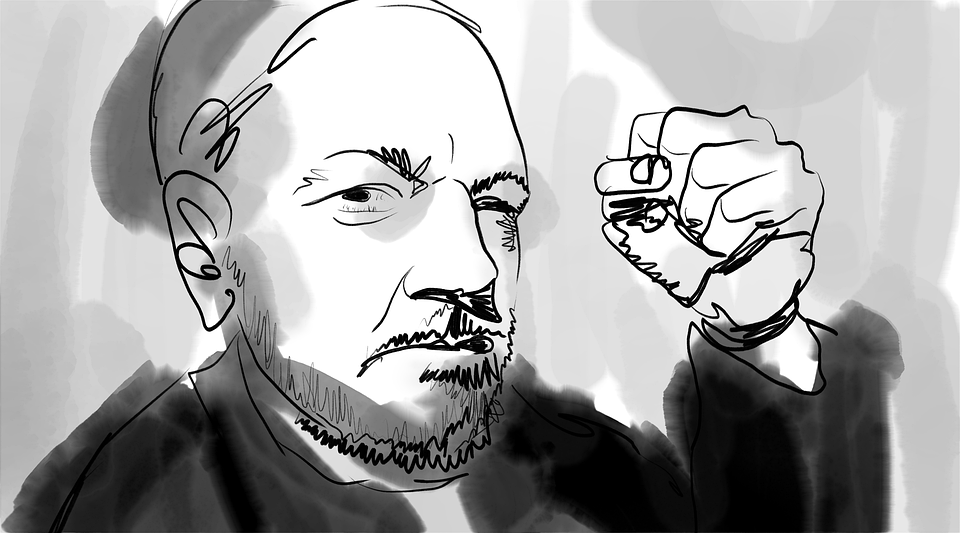
WikiLeaks and the future of press freedom

With the ongoing trials of WikiLeaks founder Julian Assange, his potential further imprisonment poses many questions about the freedom of press and free speech in the US and around the world.



So far: the case of Assange

The Australian journalist, publisher and activist founded WikiLeaks in 2006, with the goal to make processes and acts more transparent, even regarding the highest and most secure institutions around the world. Through the safe algorithm of WikiLeaks, people working for these institutions are able to upload classified and top secret documents. These people who “leak” such cases for the wider audience of the internet are called whistleblowers, and their safety is pretty much up to the hands of WikiLeaks.

Launched almost a decade ago, the first criminal investigation of Assange, the founder of the site was the direct consequence of WikiLeaks publishing war logs and thousands of classified documents of the Iraq and Afghanistan wars. In the fall of 2010, Sweden also issued an arrest warrant against Assange on the basis of allegations of sexual assault, but dropped the investigation in 2019.

Assange received asylum in London’s Ecuadorian Embassy in 2012, but was arrested and sentenced to prison for 50 weeks in early 2019 for violating his Bail Act at the Embassy. A month later he became the first publisher to be charged unter the US’ Espionage Act of 1917, facing up to 175 years in prison if found guilty.

As of now, Assange awaits further decisions since in early January British judge Vanessa Baratiser ruled that he should not be extradited on grounds of mental health, a decision that came after Assange’s partner claimed last December that the man is being held in ‘atrocious’ prison circumstances. Based on a report by The Sun, Assange also suffers from hallucinations and suicidal thoughts, even a razor blade has been found once in his room.

Even though his extradication was ruled against, the UK refuses to give the WikiLeaks founder bail. He had already been offered shelter by a member of parliament of his home country Australia, and the president of Mexico quickly reacted to the ruling of the UK court, promising to give Assange political asylum.


The toll on press freedom

The incredibly long case of Assange poses further questions about the state of global press freedom. If we take a step away from the personal allegations Assange is facing and look at the greater scheme of whistleblowing and telling the truth about certain well-connected and influential agencies, we can observe that the case of Assange does not stand out at all. The WikiLeaks founder was not the only one to get imprisoned; Chelsea Manning, for example, the whistleblower behind the aforementioned war logs had spent years in prison for exposing the top secret documents.

This trend of the imprisonment of journalists and publishers not only challenges, but threatens the exercise of freedom of speech. The fear of being prosecuted holds whistleblowers back from releasing their information, which, most of the time, are important for the public to know. Through its algorithm, WikiLeaks provided a safe space for whistleblowers, yet the safety of the site is clearly questioned after all that happened.

The wrongdoings and crimes of national bodies and agencies cannot be withheld on a larger scale, since these organizations not only affect those caught in the midst of war, but are often influencing the main aspects of societies around the world, such as politics and human rights.

Unfortunately a stagnation of the release of these documents is already present, since there hasn’t been any bigger information-dump on WikiLeaks since 2018. Of course the site had been rightfully criticized for leaking unnecessary private information of the involved parties like social security numbers and addresses, making the releases ethically questionable and the topic of whistleblowing more complex.

The unfiltered way of operation is not the only attackable aspect; WikiLeaks has also been under fire for meddling with politics, such as the case of the release of Hillary Clinton’s emails, which highly influenced the results of the 2016 US presidential elections.

But we have to see this problem from a broader perspective and ask ourselves the question if the discomfort of war criminals, law-offending politicians and peccant individuals is more important than the truth being published.

The future

This problem is immensely complex and there have not been any satisfying solutions thus far that would benefit the whistleblowers and publishers. The laws surrounding internet press and online journalism are still shallow, and they are often not looked at from the perspective of freedom of speech, but are viewed through lenses which are more beneficial for the individuals and organizations whose private information had been published.

That is acceptable if we are speaking of someone who does not have a direct influence on crucial aspects of life, but as in the case of Assange and WikiLeaks, the shared data gives insight to the operation of governmental bodies that oversee everyday life.

That is why new laws and regulations, such as the EU Whistleblower Directive should be  further implemented, protecting the rights of whistleblowers, and courts around the world should start viewing this issue as one that could seriously impact free speech and the press. The road to an acceptable solution is compound and unyielding, but it is one the world has to take in order to develop global press freedom and promote human rights.

by Boglárka Nyirádi (student at the University of Pécs)

Source of photo: Pixabay